
as your personal book + wine sommelier, I, along with my brilliant team, will be reviewing and recommending books + wine based on what we’re reading and drinking, in addition to sharing other thoughts about the book and wine industry. add your own comments to tell us what you’re enjoying reading and drinking! enjoy!

Finding Freedom: April 2021 Book + Bottle Pairing
Libertie by Kaitlyn Greenidge + Mermosa Bubbles
A few weeks ago I attended a webinar with the lady entrepreneurship group I’m part of (Babe Crafted - highly recommend) where an incredible local designer Lisa Gilmore did a talk about developing your signature style. The secret she said, was to own your uniqueness. You’re representing yourself to the world and to do that, you have to know your personal truth. We may be inclined to think of style as trivial, but really there’s a freedom in being able to express yourself in your personal truth. It might be wearing a ripped grunge shirt in high school to test your mother’s resolve, or it might be a woman donning pants at the turn of the century, or it might be a man wearing a dress and makeup. There are other ways, too, beyond just style, of representing ourselves. Our careers, who we keep as friends, and the politics/culture we align ourselves with - these all help tell the world who we are. We can find many ways to announce ourselves to the world - this is who I am.
Here in America, today, many of us take freedom for granted. We are free to dress as we choose, we are free to pursue careers without regard to the color of our skin or our gender, we are free to choose the significant other we spend our lives with. This hasn’t always been the case, as we’ll see. But are we really as free now as we believe ourselves to be?

THE BOOK
I’ve been anticipating the release of this book for a while. Libertie is an historical fiction novel based on real people and a real story: Dr. Susan Smith McKinney Steward was the first Black woman to become a medical doctor in New York State and had a daughter who moved with her husband to Haiti only to be disappointed by her options there, as well. Author Kaitlyn Greenidge fictionalized these women’s stories through the characters of Dr. Sampson and Libertie in order to explore the meanings of freedom for blacks during reconstruction, but also subconsciously challenging us to understand what freedom means for us today.
Libertie is a coming of age story of a free-born black girl in the mid to late 1800s. Her mother, also free-born, becomes the a medical doctor, opening a practice in Brooklyn, New York. Libertie’s character feels overshadowed by her mother’s success and by her mother’s aspirations for her - it’s a given that Libertie will also study medicine and use her “freedom” to become a black doctor as well in a world where that isn’t an option for most black people, much less for black women. As most young people would, Libertie resents having her future planned out for her and rebels against her mother, eventually marrying a man and following him to Haiti where’s she’s promised a life of freedom. She resents her mother catering to white women in order to fund her practice, and looks forward to a life in a country where all the people are black and equality reigns. What she finds there, however, is different than she expects, and she discovers she has lost some of the freedoms she had taken for granted in exchange for other freedoms.
I think one of the morals of the story is that we have the power to create our own freedoms, and that looks different to each of us. To Libertie’s father, freedom was only found in death. One female character gains the “freedom” to say whatever is on her mind because she had been labeled as “crazy” - she’d rather be considered “crazy” while having the freedom of speech than to be labeled as a “lady” and have to keep her mouth shut. One man escapes slavery only to be imprisoned by his love for a woman that ultimately drives him to his death. Two women seem free from the want of husbands or marriage, until Libertie realizes that they are lovers and are not actually free to love who they want publicly. Libertie’s mother is free-born but feels a slave to her duty to be a doctor for her community and to avenge the death of her sister who died unnecessarily because there were no doctors to treat blacks in their youth. A free male character seems to have the most freedoms of anyone in the novel, until we realize he is imprisoned by his father’s history, behavior, and expectations of him. Almost all the characters in the books are free-born, which eliminates the most obvious conception of freedom (vs. slavery) so that the reader can dive into the more nuanced aspects of this state of being.
At times, Libertie seemed ungrateful and insatiable. It was frustrating to watch her have almost no agency - for almost the entire book her desires for her own life were simply reflections of others’ expectations of her. And that was one aspect of the story - was Libertie free if she had no idea of or control over who she even was? But, this personality trait allowed the author to explore all the ways in which Libertie understood freedom as a young person and how her understandings change as she matures. She meets characters along the way that introduce us to layers of complexity to the meaning of freedom. Libertie keeps thinking that “freedom” is right around the corner, given by circumstance, but ultimately realizes she’s had freedom all along and just needed to trust herself.
We can also ask ourselves the same questions today, albeit about different areas of our lives. Yesterday, I was on a very interesting webinar with the American Booksellers Association and Danny Caine, owner of The Raven bookshop in Lawrence, Kansas, and author of How to Resist Amazon and Why. He challenged our assumption that we have a choice in how we shop, and argued that we are not, in fact, free, to shop and spend, because the government has allowed some businesses to operate outside the rules that the rest of us have to follow. Perhaps some of us are well enough off to resist Amazon, whereas others don’t have the financial freedom to spend more to make a political statement.
I also encourage you to read more about the real Dr. Steward here. It’s a fascinating piece of history that isn’t often told - I also wonder if we can truly consider ourselves “free” when we’re fed certain stories (but not others) through mainstream media and public education. I always loved that book Lies My Teacher Told Me because it introduced me to the fact that I had to do my own research to see the truth. I guess we’re at least free to take our own initiative towards freedom.
THE WINE
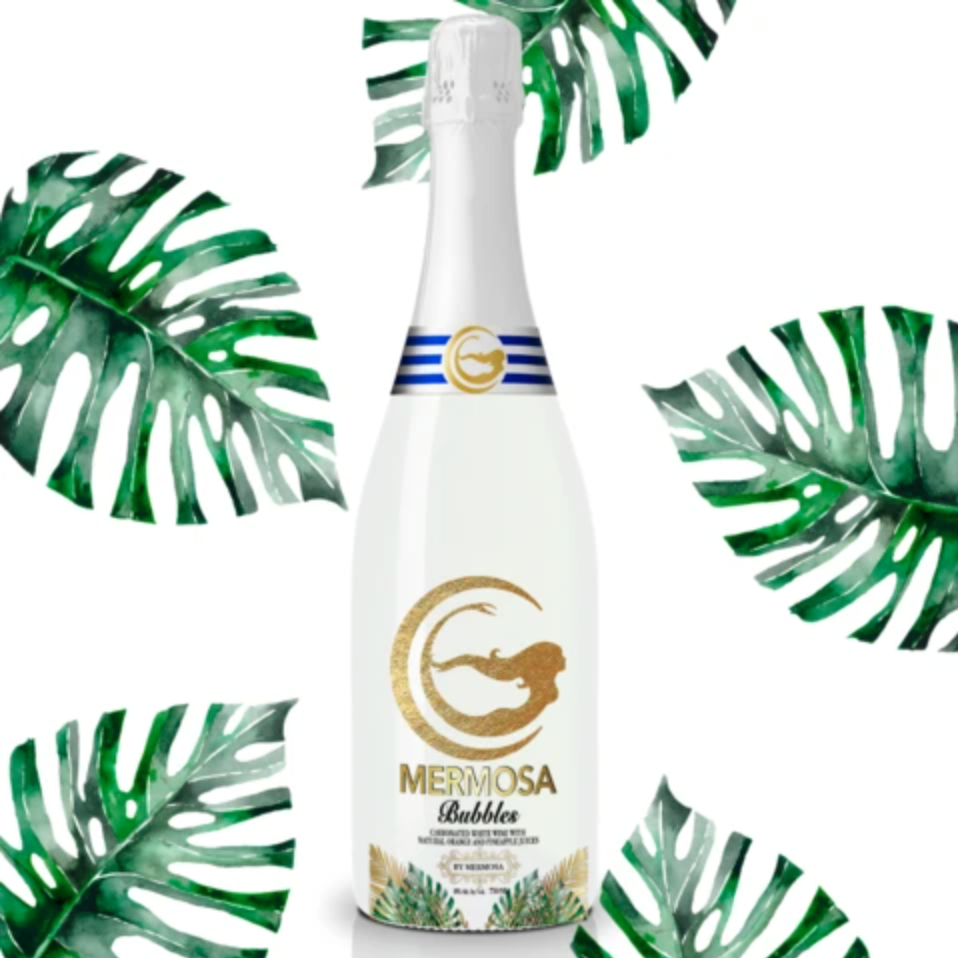
How perfect is it that I have a friend with a Haitian-American heritage and a tasty wine brand built around a story of freedom? Unplanned, but most perfectly aligned, I just had to introduce you to the Mermosa brand of wine. Desiree Noisette is an amazing St. Pete woman who has run several local businesses, most recently starting the Mermosa brand of wine - the official wine of boats, brunches, and beaches! She built her brand based on the story of her great-great-great grandmother - who negotiated her own freedom for her and her children and built a family of strong-willed successful Americans like Desiree. I let her tell her own story here:
Mermosa is inspired by a love story so powerful that it broke the chains of slavery. It's an epic tale of the founder's ancestors, Celestine, a Black Haitian woman, and Philippe Noisette, a white French gardener. They married in the late 1700s and blazed a trail of love and devotion that included Philippe claiming ownership of his wife and children to keep them out of the slave trade in Antebellum South Carolina.
Philippe's great success as a gardener led him to introduce the Noisette Rose, a flower bold and enduring like his beautiful Celestine. Upon his death in 1835, Philippe made sure that all of his money went to Celestine and their children. It could have led them out of the South to freedom, but Celestine took matters into her own hands and negotiated freedom. Her audacious spirit and their eternal love is infused in every sip of Mermosa.
We’ve chosen the Mermosa Bubbles as the wine this month because it’s so honest in what it is. An unpretentious, fun wine, made with orange and pineapple juice, for a mimosa like springtime sipper with a nod to the tropics - Florida and Haiti. As the weather starts warming up here in St. Pete, this is the perfect brunch wine, or wine to take to the pool. We also like that it’s only 8% alcohol so it’s perfect for day drinking without ruining your weekend! It makes perfect sense to pair Mermosa with Libertie, and we hope you enjoy the heritage and storytelling of both of these amazing items!
Other recommended books + bottles:
The Bluest Eye by Toni Morrison - uses storytelling to discuss difficult social themes
Dr. Konstantin Frank Riesling Reserve - started by a doctor, made by a woman in New York State
In Five Years: December 2020 Book + Bottle Pairing
In Five Years by Rebecca Serle + Estelado Sparkling Rosé
Hallelujah! 2020 is almost over! Boy what a year it’s been. I know the clock striking midnight on December 31st won’t solve all our problems, but it’s a threshold I’m ready to cross, even if it is just a line in the sand. 2020 hasn’t been all bad - our beautiful store was born and thousands of people have safely been able to enjoy our books, wine, + coffee. We’ve watched friendships be forged, romances develop, and we’ve shared in the joys of each other even in a year where it’s so hard to be together. We are truly so fortunate to have had these sorts of experiences in this sort of a year. But, still, 2020 has been rough. In that light, I tried to pick a book and a bottle that would bring light and joy into the final few days of this dark year.
THE BOOK
If you knew all this was coming five years ago, what would you do differently? Would you love the same person, or leave them? Would you love them harder? Would you work as hard? Would you finally take a risk? That’s the premise of our December book, In Five Years. In this story, Danielle, the type-A main character, has a very realistic vision/embodiment of her life five years into the future (2025), and it’s not at all how she had anticipated. She returns to real time later that night and over the course of the ensuing five years does her best to waylay the premonition. There’s a twist that I won’t give away, but the sentiment is this: you can’t control what life is going to give you, that love doesn’t require a future, and that love doesn’t always look like what you’d expect.
“ Love doesn’t require a future.”
So often I’m reminded by my mother to “live in the moment.” It’s so easy to get caught up in dreaming and planning and predicting the future that you miss what’s happening right before your eyes. We’re all so busy all the time - are we actually choosing what we want our lives to be? Just because something fits a plan we have - does it mean it’s what we really want or need? In Five Years looks at life - relationships, work, family, and goals, and forces us to ask “what if it were different?”
I picked this book after recommendations from a few friends, pegging it by its description more as a rom-com than a full on drama. I knew the book took place in 2020 and was all about getting to relive a past and thought it’d be perfect - something light and breezy to end a tough year with. I thought it’d be a beach read with a cute love story about loving the one you’re with. It would help us all to appreciate what we did have in 2020. Instead, the book was heavy with meaning, literally made me cry, and was, in fact, not at all a love story in the sense that I’d imagined. However, it was even better soul-nutrition than the silly, easy read I thought it would be. Still, I read it in one short sitting, flipping the pages quickly to find out if Dannie’s life developed into the one in her vision or if she was able to direct it another way. Through these tears, I have more appreciation for what we did have in 2020 - what we have right now. We don’t need 2020 to get better, we just need to appreciate what we do have right now, despite what the future might hold.
THE WINE
I picked a wine to go with a rom-com - light and bubbly and pink. Then, the book was so much more than that…should I change my wine selection? Bubbles are great for December, but does it jibe with the drama of the book? Well, these aren’t just any bubbles, so it turns out it works just fine.
The book takes place in New York City, but Dannie has a legal heart-to-heart with a couple of her clients in southern California - a heart-to-heart that helps open her own mind to her own predicament. She loves New York, but in California, she feels space - to be a little less predictable, to make mistakes. This is a huge moment for Dannie and one that helps set her new future in motion. Our wine, Estelado is from Chile, a sparkling rosé made from the País grape, but the País grape also has its shining moment in California. Originally from Spain, País found its true purpose in the Americas - growing in California for so long it is often called the California grape, the Mission grape, the Los Angeles grape, or Criolla. País is an old standby - it was used for centuries to make sacramental wine - necessary but not necessarily desired. It was predictable, made sense, and was a little boring.
But recently, winemakers have been experimenting with grape varieties that can perform better than their heritage suggests if given the right care. The País variety, grown by many small farmers, had been all but forgotten, until recent winemakers chose to give it a new lease on life. País often makes light, simple red wines, but when turned into a rosé, it’s really allowed to shine! The grapes are dry-farmed which means they don’t irrigate the vines, causing them to struggle, thereby producing fewer, but more flavorful berries. Bursting with flavor, the wine is then turned into sparkling wine in the traditional (champagne) method of secondary fermentation in the bottle. It has incredibly low dosage (added sugar), is certified sustainable, and is fair trade certified throughout the entire production process.
When made deliberately, with care and intention, the País grape has become something beautiful and desirable in its own right. With tiny bubbles, a natural creamy brioche character, and pleasant red berries and sweet citrus and melon notes, this wine is a steal at only $17/bottle. It’s zippy and clean and energetic but that’s all underlined by a realness, a homeyness, and a complexity that lingers on the finish.
I won’t give away the ending of the book, but let me just suggest that you pop the bottle with your bestie and share your book when you’re done <3

The Roaring Twenties: February 2020 Book + Bottle Pairing

Fun Fact: In the 1920s champagne was served in champagne coupes like these! The fluted champagne glass didn’t become popular until the 1970s. Now, the trend is to use regular white wine glasses for sparkling wine to allow for greater appreciation of the wine’s aromas.
Most of us have read The Great Gatsby - maybe in high school or perhaps more recently. We’ve dreamed of the fancy dresses, dapper outfits, late night parties, and the nonchalant luxury of the the roaring twenties. Well, baby, it’s the roaring twenties again. So, to celebrate the twenties, we thought we’d pick some F. Scott Fitzgerald and transport ourselves back to the last century when everything glittered! I knew I wanted to branch out from the classic Gatsby and try something new, and as I was browsing the titles one in particular just spoke to me: This Side of Paradise.
As you know, Book + Bottle has been a long time coming. For many months now, I’ve felt that the next thing (the lease, the building permits, breaking ground, opening day) is imminent, right around the corner. We’ve made huge progress but it still feels like a slow slog. The progress on the store feels like a coming of age story: I’m the young (well, young enough!) protagonist bringing my dream into maturity, fighting trials and tribulations along the way. The German word for this type of coming of age novel is Bildungsroman, which literally means “formation novel.” Now if that isn’t the perfect metaphor…
I know, because I’m behind the scenes, that Book + Bottle is going to be paradise for all you book and wine lovers. And right now, we’re just right on the other side of it, looking in.
THE BOOK
Turns out, This Side of Paradise is also a Bildungsroman. In it, handsome Amory Blaine grows up amongst wealth and privilege, attending prep school at St. Regis and college at Princeton. He wants for nothing except for approval and distinction in the world. The first few chapters read almost like Gossip Girl with children play acting as adults. What’s so particularly recognizable in Amory’s character is his millennial expectation of greatness but insecurity in how to achieve it. He works toward self-improvement throughout the novel - taking up football for sport and reading literature to expand his mind. After he enlists in the army at the outbreak of the first World War, his beloved mother passes away and the family loses its fortune, leaving Amory to build his character and pocketbook in a new way. In this stage of his young life, he faces actual tribulations of failed romances, the loss of loved ones, a struggling career, and a general cynicism about the world around him. Amory navigates this period with self-destruction and small graces, eventually emerging a bit more hopeful and much more of an adult. He is “formed” you could say.
The name This Side of Paradise comes from a poem by another writer known for his good looks, Rupert Brooke, entitled “Tiare Tahiti,” (see below) with the line “Well this side of Paradise!… There's little comfort in the wise” which forms one of two epithets in the book. This sums up the theme of the novel: on the path to the perfection of heaven, the slog of life on earth can be very hard. This disillusionment is not unique to the 1920s. How curious that one hundred years later, we see youth struggling with the same idealism and disappointment of an age gone by. It’s almost a character study of the “entitled millennial”: Amory Blaine is unlikable at the beginning of the story - spoiled, entitled, and lazy. Yet, throughout the course of the novel, we begin to grow more fond of Amory and identify with his aspirations and efforts to be worthy. Fitzgerald narrates the book in an almost a self-absorbed sort of way where we get to participate in Amory’s development into a more complex, interesting, and redeemable character. There couldn’t be a more relevant time to read this book.
I love it, too, because of the focus on literature - Amory reads many of the greats of the time, and the name dropping almost serves as an education of sorts of the liberal arts of that time. Fortunately, someone has compiled a bibliography of the books referenced in This Side of Paradise if you want to read what Amory read on his path toward greatness.
What’s endearing about the history of this novel is why Fitzgerald wrote it: Fitzgerald had fallen in love with a beautiful, wealthy woman by the name of Zelda. After a brief affair, she broke off their relationship, and Fitzgerald thought getting published was the only thing that would bring her back. That set a fire under his toes and This Side of Paradise was published in 1920. It worked - the book wooed Zelda - and they married that same year. To honor this underlying purpose of the novel, we’ve chosen Iron Horse’s Wedding Cuvée to pair with the book.
“Too much of anything is bad, but too much Champagne is just right.”
THE WINE
It may be cliché to do bubbles with Fitzgerald, but there are too many reasons that the Iron Horse Wedding Cuvée is the perfect pairing to ignore it. Like the Fitzgeralds’ marriage, prohibition also started in 1920, and that decade produced some of the classic “prohibition era” cocktails that remain classics today, like the Old Fashioned or Gin Fizz. And, if people weren’t drinking cocktails, then they were drinking champagne, as it was the drink of the rich and famous. Real champagne was hard to come by, so it really represented the affluence one had to possess to have access to the drink. Bubbles are celebratory and great for parties, and if you lived in New York City during the Jazz Age, as Amory does for a spell, you were sure to be sipping bubbles. Champagne fueled the late night, indulgent parties that Amory attended in both Princeton and New York. This era was all about luxury, indulgence, and ease, and bubbles fit the bill perfectly. Yet, Fitzgerald is American through and through, so we’ve picked an American bottle of bubbles to showcase the uniqueness of the States in the 20s.
However, you can’t party forever, and eventually prohibition and austerity seeped into American Culture. It wasn’t until 1933 that Prohibition ended in the US, and it took over 30 years to really get the American wine industry going again. But once it did, it quickly began to make its mark.

A view from the top of the hill at Iron Horse Winery in Sebastopol, California.
Iron Horse Winery is located in Sebastopol, California near Sonoma, at the top of a brilliant little hill overlooking the rolling vineyards. Founded in 1976, the winery has become renowned for making high quality American sparkling wine. It was served at the historic Reagan-Gorbachev Summit Meetings that helped to end the Cold War, and has been served through six consecutive White House Administrations since. This marked a turning point in American wine history, when our government recognized that American wine could be excellent and it made a statement to serve American wine at these international political meetings. Iron Horse is a family-owned winery, and when the founders’ daughter Joy Sterling was married, they made a wine they called the Wedding Cuvée in honor of the event. It was so delicious and so popular that they release it almost every spring, and this is the one we’re enjoying today alongside This Side of Paradise. Joy Sterling is now the CEO of the winery and author of several indulgent books about living on a winery.
“Here’s to alcohol, the rose colored glasses of life.”
In addition to being bubbles and being American, the Iron Horse Wedding Cuvée is also pink! F. Scott Fitzgerald famously said that alcohol was the rose colored glasses of life and this rose colored wine certainly makes life even better. With a beautiful rosy peach color, this wine exudes the sophistication and elegance that Amory aspired to and at some points achieved. A little exotic, even, with notes of mandarin orange peel and nutmeg, the wine is smooth and tingly on the palate and balanced in its approach. It’s romantic and sensual, but also fitting for a celebration.
Now here’s the cherry on the top of this perfect pairing: the winery’s own tasting notes for this release of the Wedding Cuvée describe a hint of “Tahitian lime,” which ties in beautifully to the poem below, “Tiare Tahiti”, which was Fitzgerald’s inspiration for This Side of Paradise. Cheers!
Tiare Tahiti
Mamua, when our laughter ends,
And hearts and bodies, brown as white,
Are dust about the doors of friends,
Or scent ablowing down the night,
Then, oh! then, the wise agree,
Comes our immortality.
Mamua, there waits a land
Hard for us to understand.
Out of time, beyond the sun,
All are one in Paradise,
You and Pupure are one,
And Taü, and the ungainly wise.
There the Eternals are, and there
The Good, the Lovely, and the True,
And Types, whose earthly copies were
The foolish broken things we knew;
There is the Face, whose ghosts we are;
The real, the never-setting Star;
And the Flower, of which we love
Faint and fading shadows here;
Never a tear, but only Grief;
Dance, but not the limbs that move;
Songs in Song shall disappear;
Instead of lovers, Love shall be;
For hearts, Immutability;
And there, on the Ideal Reef,
Thunders the Everlasting Sea!
And my laughter, and my pain,
Shall home to the Eternal Brain.
And all lovely things, they say,
Meet in Loveliness again;
Miri’s laugh, Teïpo’s feet,
And the hands of Matua,
Stars and sunlight there shall meet
Coral’s hues and rainbows there,
And Teüra’s braided hair;
And with the starred tiare’s white,
And white birds in the dark ravine,
And flamboyants ablaze at night,
And jewels, and evening’s after-green,
And dawns of pearl and gold and red,
Mamua, your lovelier head!
And there’ll no more be one who dreams
Under the ferns, of crumbling stuff,
Eyes of illusion, mouth that seems,
All time-entangled human love.
And you’ll no longer swing and sway
Divinely down the scented shade,
Where feet to Ambulation fade,
And moons are lost in endless Day.
How shall we wind these wreaths of ours,
Where there are neither heads nor flowers?
Oh, Heaven’s Heaven!—but we’ll be missing
The palms, and sunlight, and the south;
And there’s an end, I think, of kissing,
When our mouths are one with Mouth....
Taü here, Mamua,
Crown the hair, and come away!
Hear the calling of the moon,
And the whispering scents that stray
About the idle warm lagoon.
Hasten, hand in human hand,
Down the dark, the flowered way,
Along the whiteness of the sand,
And in the water’s soft caress,
Wash the mind of foolishness,
Mamua, until the day.
Spend the glittering moonlight there
Pursuing down the soundless deep
Limbs that gleam and shadowy hair,
Or floating lazy, half-asleep.
Dive and double and follow after,
Snare in flowers, and kiss, and call,
With lips that fade, and human laughter
And faces individual,
Well this side of Paradise! ....
There’s little comfort in the wise.