
as your personal book + wine sommelier, I, along with my brilliant team, will be reviewing and recommending books + wine based on what we’re reading and drinking, in addition to sharing other thoughts about the book and wine industry. add your own comments to tell us what you’re enjoying reading and drinking! enjoy!

I Died: December Book + Bottle Pairing
Little Weirds + Gewurtztraminer
I died when I read this book. It’s true. It was so funny, and so poignant, and so pertinent, that I simply died.
The expression it killed me that we used to use to mean something cracked you up or broke your heart has been brought agency - now you just die. You can die when experiencing something so great, or so horrible, or so embarrassing, that you just simply die there on the spot. Jenny Slate died several times in her book Little Weirds. She died from the pleasure of eating a sardine sandwich, she died of old age with an (ex) husband in a what -if-we-had-stayed-together future memory story, she died as as an old, sad vagina, and she died listening to a fellow who mansplained her right to death.

Jenny Slate‘s little stories are like listening to a great new soundtrack where you want to play the best track over and over and over again as you’re driving in your car because it gives you such good feels that you want to live within it as long as possible.
My favorite story was called Kathleen/ Dog-Flower-Face. I find the story to be perfect. You’ll need to read it yourself to see. In it, Jenny asks her landscaper, Kathleen, to put some blue flowers in her yard, and Kathleen tells her that her dog will want to smell them and they’ll stick to his face, “and I don’t know if you’ll like that.” Jenny says she would like that.
“What I didn’t tell her was that when she asked me that question about flowers on my dogs face, she showed me that a legitimate option for experience, a true one that is real and is deeply concerned with beauty, could be mine…do you or do you not want flowers that stick to a dog’s face. Yes or No… In making sure, Kathleen gave me the opportunity to say out loud to another person that ‘I would like my old dog to have flowers stuck to his face.”
The whimsy in the image of a flower-covered dog and the purity of Jenny realizing she has the choice to create delight in her own life (“I said who I was on my land”) make this little story both heartbreaking and heartmending simultaneously. I would like to listen to this story every morning to set the tone for my day.
Jenny Slate‘s chapter on what if‘s make you feel like a child again having that wondering every little thing that happens in the world and wondering why it happens and asking questions as if you were the first person to have ever had them before

Red Geraniums
Jenny Slate is wild and loves red geraniums. Geraniums pop up throughout her stories and symbolize the Wild Woman within her. There’s a New York Times Bestseller called Women Who Run with the Wolves by Dr. Clarissa Pinkola Estes about reclaiming the inner wild one. I’m reading it right now, and I’d bet Jenny has read it, too. Like Little Weirds, it’s also full of stories and cultural tales that help women relate back to their ancient wisdom of power, intuition, creativity, and knowing. In Jenny’s story Geranium, it’s this flower that makes her aware of her inner wild woman and calls her back to her true self. These flowers are outdoor plants, as all plants originally were, but if you bring one inside, as a houseplant, it can still survive.
I am a wild thing, but I wanted a home. I am wild, and I wanted to be that and to belong to the greater group and have everyone know that my wildness is nothing but a bit of my colors and has nothing to do with whether or not I can be trusted. A geranium is a wild thing. It is so wild you can hardly kill it. But it does not take over your house if you put it inside.
It’s this sense of wildness, roses climbing a trellis, geraniums that can live inside a castle, little flowers on a dog’s face, sugar and spice and everything nice, that made us pair Little Weirds with this month’s wine.
THE WINE
Jenny is a little wild, and a little weird, and so is Gewurtztraminer. Gah - VERTZ - trah - meener. Gewurtz is a highly aromatic white wine from Germany and a few places in France and Italy. I even had a delicious Gewurtztraminer from Colorado once. Bad ones can be cloying and off-putting, reminiscent of your grandmother’s old closet after her overdone perfume bottle fell and cracked, and leaked into the dust. Great ones can be complex, exotic, and sensual with flavors of lychee, ginger, honey, and spice, and aromas of rose water, smoke, and…geranium. Too much geranium in a wine, like too much wildness in a person, can be considered a fault, but when it’s there in healthy moderation, it’s one of the things that makes Gewurtz, Gewurtz.

Flavors of Gewurtztraminer, Courtesy of Wine Folly

Gewurtztraminer was the first wine that really did it for me. I was making a nice dinner for my then boyfriend, and the fresh fall day called for pork tenderloin roasted with apples. A stop by my local wine store had me pairing the meal with a German wine I’d never tried before in a tall, skinny green bottle. It was perfection. That one was an Albert Boxler Gewurtztraminer, and it was divine.
This particular Gewurtztraminer, Zinck, is…..okay. The first sip was that dusty closet I was telling you about. Yuck. But once it coated my palate the following sips were actually nice. This one was floral with more fruit than spice. The fruity acidity made it taste a little a little sour on the finish, and there was a touch of sweetness. I sipped on this finishing Little Weirds in front of my mother’s Christmas tree, and it was perfectly fitting. The hint of spice was warming, the sweetness balanced out that sour acidity to keep it drinkable as I read, and the exotic lychee fruit and rose matched the special feeling of the season. And, the geranium essence made it feel a little wild, too.
I personally prefer Germany to Alsace (where this one was from), and sweet to dry, because the little bit of sugar helps bring out the alluring spice and flower notes. It also helps it pair better with food, in my opinion, especially with Indian or Moroccan dishes that are full of heat and spice. This particular wine cost $13 at ABC and it was fine, but I’d strongly recommend finding yourself a high quality German Gewurtztraminer (maybe $25) for the one or two times a year that you reach for this little, weird wine. In fact, I’m going to do just that myself.
A LITTLE HOLIDAY TREAT FOR YOU
Before I moved back home to St. Pete, I was living in Colorado. As soon as it got cold, you could find this magical drink called Glühwein everywhere. A nod to the Germans who came to Colorado to ski, Glühwein is a warm, spiced wine that goes down a little too easy when it’s snowing outside. While it might not be snowing here, we are getting some cold days, so this is the perfect thing to warm you up from the inside out. I’m going to make this for my neighborhood open house to share the warmth of the season with my friends and neighbors. This recipe comes from the St. Regis Hotel in Aspen Colorado. I hope you enjoy! Cheers!

Beyond Ordinary: November Book + Bottle Pairing
Ordinary Girls + Pét Nat
It’s November, and we’re moving quickly from the slow, easy summer months to the busy hustle of the holidays. With the days getting shorter, it can feel like there’s not enough time to get everything done, and social gatherings can start to take the place of our quiet reading nights. This might not be the month to start a thick, classic piece of literature unless you’re determined to make finishing it your new year’s resolution. That’s only one of the many reasons we were so glad to read Ordinary Girls for this month’s Book + Bottle pairing. We flew through the brilliantly written pages, wishing there were more. The story is not light, for sure, but it draws you in so you must finish it, you must find out what happens to this poor girl. The other reason we’re glad to have read Ordinary Girls is because of the way it makes the reader examine their own fortunes and be overcome with gratitude. Thankfulness is a common trope for Novembers, but this book expands the meaning of gratitude and opens our eyes to empathy and understanding. Exactly the reason for the season.
Meanwhile, although fall is here, we’re only just starting to get respite from the summer’s oppressive heat and humidity. We’re still drawn to refreshing beverages, but are trying our best to capture the essence of fall. While we’re not going to select a pumpkin-spice wine for the month, we wanted something a bit more robust, interesting, and fall-like, while still having an essence that would pair with Ordinary Girls. Just like the book presents topics that many of us might not have encountered in our day to day lives, our wine this month might be new to you as well, but in a more positive way. This November, we’re drinking a wine called Pét Nat - we’ll explain what it means and where you can get it below. Read on to see why this wine pairs perfectly with our book, and our bonus this month is a suggestions of wines to bring to Thanksgiving dinner. It still seems far away, but it’ll be here before you know it.

Miami Beach at Night
THE BOOK
Ordinary Girls by Jaquira Díaz is a coming of age story of a young girl in Puerto Rico and then Miami Beach. She has childhood crushes and best friends, and she struggles to gain independence from her family. She tries to fit in, learns who she is, and tests the boundaries of what it means to grow up. However, unlike some of the lighthearted stories we may have read in our adolescence, Jaquira tells a story of horrors no adult should have to endure, much less a child. Instead of a coming of age story where a somewhat middle class kid experiences a dalliance with drugs, one bad night with an abuser, or a brief emotional struggle with identity, Jaquira fights these battles her entire childhood and through her young adult life. The pain is unrelenting, but she’s somehow able to keep the tone hopeful. The book is a memoir of her young life, but it reads like a novel. You almost wish it were a novel, so you could ignore the atrocities hoping that no one actually endured them. Ordinary Girls has been likened to a Latinx Educated in that it exposes the traumatic behaviors of a small community that fostered an isolating and painful upbringing and shrouded the main character in a horrific fate that she is impossibly able to overcome to become a stable, content, and successful adult.
Jaquira watched her father deal drugs; watched her mother abuse them, falling into the waiting arms of schizophrenia. She was beat by her grandmother, raped by her first boyfriend, and harbored secret affection for her girlfriends. She was a drop out by age 16, been in and out of jail several times, and tried to commit suicide for the first time at age eleven. This is hopefully a life few of us can relate to.

Jaquira’s life at full throttle
Díaz starts the story in a relatively positive light. She’s a kid with a decent home, plenty of food to eat, and a good friend she plays with every day. It’s the hopeful naivety of youth, where she’s shielded from harsh truths by ignorant bliss. Slowly, as Jaquira becomes more aware, the reader sees the family adopting destructive habits and watches as their life begins to fall apart. We start to see her community as a hindrance rather than a support. Her father is dealing drugs, her parents fight violently, they stop watching over the kids, allowing them to go rogue. They move to Miami Beach, exacerbating their challenges. Enter more drugs, violence, abuse, and tragedy. The world Díaz sets out for us is endlessly discouraging. Most of the characters have it as hard as Jaquira, and we’re left with little hope of her escaping. Where would she go? She doesn’t know anyone stable, with healthy habits that could show her there’s a different way. Her role model is her 18 year old aunt who does drugs, but is pretty and has a car. She’s still alive at 18, and that’s the best possible scenario Jaquira can see for herself at that age.
Yet, Jaquira shows us repeatedly how resilient young people are. Amongst the terror, she’s able to experience joy, love, and friendship. We see glimpses of her and her friends playing on the beach, eating sugary treats at a theme park with the unabashed joy of a child on a ride, or writing notes to friends in class. That’s where most of us can relate, and why the story is so powerful. It’s not all dark - there’s depth and light, and Jaquira doesn’t feel sorry for herself. She tells it like it was - the good, the bad, the ugly. She holds on to the little nuggets of good, and it’s these that give her hope. Her grandmother abuses her her entire life, but she holds on to the pleasant and loving conversation they share on the phone shortly before her grandmother’s death by suicide. These heartwarming flashes make the reader smile for a second as we imagine similar scenes from our own childhoods, and then help us relate better to the injustices that fill the remainder of Jaquira’s life. We see ourself, our niece, our daughter in the joy, and then recoil as we imagine them in pain. The book is an emotional rollercoaster, but one that you keep reading hoping the story ends on an upswing.
“You remember that first game of chess you played with your father: You, sitting across from him at the table, thinking Who does this old man think he’s playing with? He enjoys the stunned look on your face as he captures your last knight and lectures you on who knows what, trying to make life lessons out of stories.
You think you’re playing. He thinks he’s teaching.
You’re determined to do the opposite of everything your father says. He’s determined to stop you in your tracks. This is what passes for I love you these days.
You learn that day that you will always remember your one bad move, that moment when you could’ve made one choice but made another, and what follows is your whole fame falling apart, piece by piece, check, cross-check, and suddenly, when you’re fourteen, checkmate.”
Just as with the book Educated, the reader questions where the fault lies. Is it the community, the family, or the girl that led to all that destruction? It’s easy to blame the community, as there’s not a single role model available for young Jaquira to show her what her life could look like. Her neighbors are the users, her peers are the instigators, and even the cops judge there to be no innocence left in her community. Bodies are found in the neighborhood bushes or on the beach and drugs seem easier to come by than books. What person could come out of that community as a normal, stable citizen? But you do see a few people get out - the girl who lives with her teacher mother in the same conditions, but who is loved, protected, and guided through the destruction to a better life. Even Jaquira’s little sister, Alaina, makes it out by being raised almost exclusively by her Abuela who had bigger hopes for the littler girl and was able to protect her from the outside. So then family? Is that where the fault lies? Jaquira’s mother was a user with unstable mental health and a proclivity for violence - so that’s what’s going to be imparted on Jaquira. But, how can you expect her mother to be any different when she, too, was raised by a relatively absentee mentally ill mother who used beatings as her primary method of communication. Her white grandmother abhors the black side of the family, telling Jaquira that because of her heritage, she’ll never be good enough. Or Jaquira herself? We watch her identify wrongs her family and community commit - she seems to know inherently that there’s a better, different way. But we watch painfully, as she misses these escapes and falls time and time again into the same patterns of destruction.
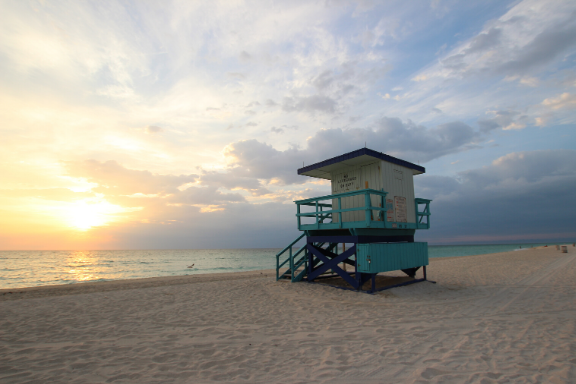
The Lifeguard station that makes several appearances in the story - showing Jaquira’s brief brushes with salvation.
She does, eventually, start trying to make better decisions. She sees what life could look like, what she wants for herself. She sees a different life in her boyfriend’s family — a family that treats one another with respect, support, and love. She follows his path, enlisting in the military, feeling necessary for a moment, only to drop out at the last minute. She moves away, gets into school, only to come back to Miami Beach and fall into the same patterns. Each step she takes, she gets a little closer to a better life, but she has to leave a large part of her past behind her to truly escape. Ultimately, Díaz is saved by education. She sees she’s had talent as a writer all along - she’s given the space to write her story and that of others, to give something of herself to the world. She graduates from college, goes to grad school, and gets a job as a teacher and then a journalist. She survives.
Throughout her story, Díaz refers to herself and her friends as “ordinary” girls, and she gives that title to the book. For some, her life is anything but ordinary, to others it’s a mirror of their own. To Jaquira, it was her life, it was ordinary, and it was unexceptional because that’s what she saw all around her. This isn’t the story of one girl, it’s the story of so many ordinary girls who lived lives just like this. Díaz is able to give voice to the ordinary girls like her who were left behind, forgotten, and are still lost. And she was able to write herself into a better life.
“Jaquira Díaz’s Ordinary Girls is more than a memoir. It is an awe-inspiring, middle-finger-waving rejection of the cult and culture of shame that pervades Latinx communities . . . an unflinching yet compassionate dissection of the pain, love, and violence that cast Díaz’s life in equal parts light and shadow . . . a love letter to the girls who have been stigmatized and silenced and hurt and left behind, to those of us whose families are both a source of incredible joy and immense pain, to all of us who contemplated dying more times than we could count and came back up for air at the last possible second . . . a homecoming for those of us who miss our pátria, a mirror for those of us looking for our ancestors . . . a history of Puerto Rico that trickles into the present, right up until the devastating aftermath of Hurricane María. And perhaps most importantly, Ordinary Girls is a reminder to keep surviving in whatever way we know how, so that we can one day write ourselves out of despair and into the people we could be—without shame.”
THE BOTTLE
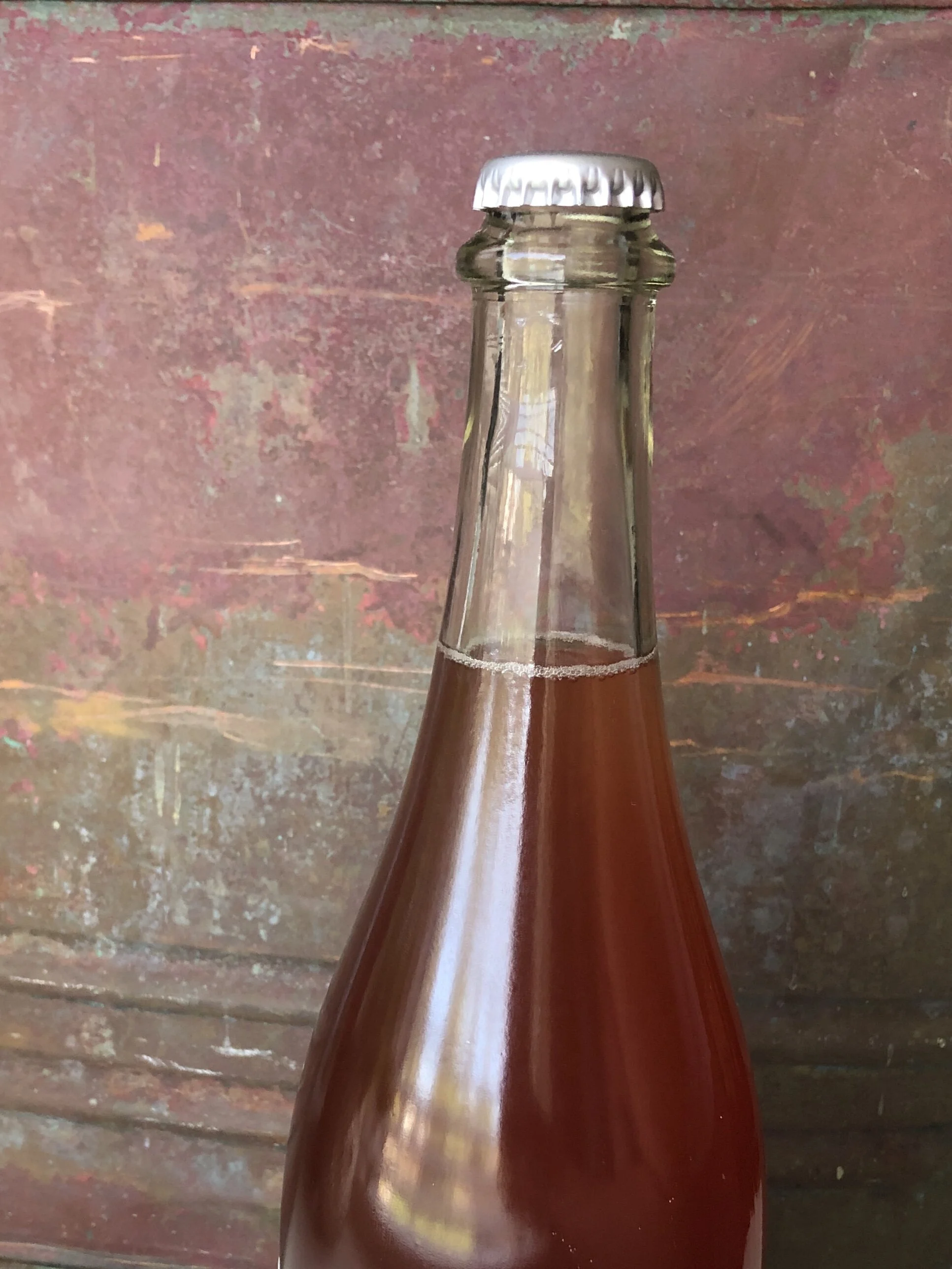
We picked a wine to pair with Ordinary Girls that we think celebrates the author’s personality. We couldn’t pick an ordinary wine to pair with Jaquira’s extraordinary tale, so we picked something at the fringe. An ordinary pinot noir made in an exceptional way — as the grapes are fermenting, but before they’ve converted all their sugars to alcohol, the juice is bottled, completing its fermentation inside the bottle. This style of wine is called Pét Nat (pétillant naturel, or naturally bubbly) because the bubbles develop naturally from the process of finishing fermentation inside the bottle. Jaquira Díaz is edgy, always on the move, ordinary and extraordinary. She’s strong, she’s unique. She’s a survivor. Pét Nat is edgy -it’s got bubbles, a different flavor. It’s almost more like spiked cider than wine - the cider quality making it a pleasant match for fall. The bubbles move through the glass taking you through different flavors and moods and experiences. It’s young, fruity, with vibrating acidity. It smells like a rustic wine, it’s not refined, but what’s inside the glass is so much more than it seems. It moves, shines, excites. It’s a natural wine - people are finally paying attention.
Pét Nat, like many “natural” wines are trendy. We’re going back to the source of what wine used to be, with minimal winemaker intervention. The grapes are picked early so they’re full of acidity. They sit on their skins for only a short time - about a day - before they’re pressed off, giving the wine the attractive peach-blush color rather than the full extraction of traditional red wine. The juice is bottled before the wine has finished fermenting, so the reaction continues in the bottle, releasing natural carbonation to create the lightly effervescent texture. Because the fermentation is happening inside the bottle, the wine is left unfiltered and the lees make the wine appear cloudy while adding a lactic, creamy mouthfeel to the finished product.
Some say this is a wine for people who like beer better because of the qualities it shares with hard cider. We think it’s a wine for adventurous folks who love wine so much they want to experience it in all its forms. Pét Nats go well with food or a warm afternoon - and you’ll see this is one of the wines we may bring to Thanksgiving dinner! It makes your setting immediately more casual, fun, and youthful. It’s a wine that celebrates the joy, the hope, and the energy we see in Jaquira’s best days of her story - something we all want to tap into.
This particular pét nat came from Johan Vineyards in the Willamette Valley, and is just a knock out. Until Book + Bottle opens and we can select the best of the best for your tasting pleasure, we recommend hopping over to our neighbor Bandit Coffee on Central Avenue and 26th Street South where they’ve got a super fun collection of natural wines, including several pét nats to choose from. Caution - not all of them are great, so make sure you talk to a reputable wine seller or sommelier to ensure you’re getting something that will brighten your day.
THE BONUS
We know you probably haven’t even put away your Halloween decorations yet, but Thanksgiving is only three weeks away. You’ll feel much better if you’ve got your wines picked out so you can have something on your list checked off. We’re here to help. We’ll probably do a Thanksgiving-themed post, too, but here’s what we know we’re bringing to dinner this year.
You know it’s a celebration when the evening starts with bubbles. You can drink these as you’re cooking, they’re perfect to welcome guests, and everyone can enjoy them as they wait for the feast. Bubbles warm up the palate to get you thirsting for more, but won’t fill you up before you fill your plate. If you’re super casual, go with a pét nat (we’ll be bringing ours to Friendsgiving), and if you’re high class, go with the real deal - champagne. We’ll be bringing a Cava from Spain or a Crémant from France. These are more reasonably priced options with the classic, pure taste of fine bubbles that make you feel rich. The lower price means you can open a few bottles, buying yourself time before the main event.
For the meal, Pinot Noir is queen. It has high acidity which makes it a good food wine, and its low tannins and lower alcohol help it pair with lighter fare like turkey. We love having mushrooms on the Thanksgiving table, and Pinot Noir is a perfect match for those and other harvest treats. We’ll be bringing a red Burgundy to keep the cost down and to keep the focus on the food (selecting a higher quality burgundy like Premier Cru or above can make the wine outshine the food or your investment could go unnoticed as guests devour their meals). For a white, we’re going to bring a Grüner Veltliner - it’s crisp and pretty neutral, so everyone will like it, and the hint of black pepper will be a perfect match for your green bean casserole.
At the end of the meal comes the toughest decision. You’re stuffed to the max, but you’re being offered pecan pie, ice cream, pumpkin pie, and cookies. We opt, instead, for a dessert wine to give us that sweet sensation without making us unbutton our pants. Our favorite here is a tokaji aszú - decadently sweet, but balanced out with acidity and savory flavors so even those people who swear they don’t like sweet wines will be asking for more. You only need an ounce or so to really enjoy, so this is a great way to share some high end dessert with your crowd.
Remember, less is more. You want to have enough for people to drink heartily, but not so many options that people have to think too much. Having the wine coursed out like we’ve done above gives a feeling of elegance and propriety, while still allowing you to indulge in the best part of Thanksgiving dinner! Enjoy!
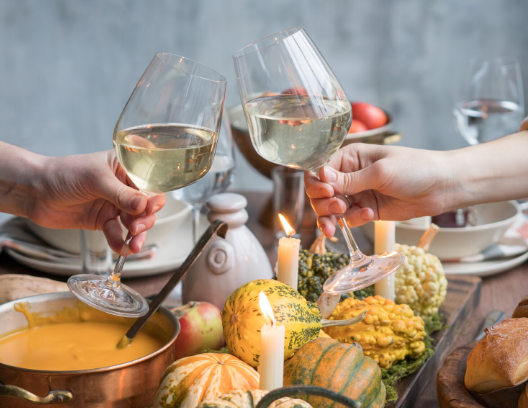
Cheers to a happy Thanksgiving!
Ghosts and Gore: October Book + Bottle Pairing
The Halloween Tree + Sinister Hand Red Blend
It’s October, which means the best time of year to all you Halloween- and fall-loving folks! We’ve got tricks (a guest wine reviewer) and treats (wine and candy pairings!) for you today. And, our book + bottle pairing will put you in the mood to string some cobwebs across your porch and stock up on sugary sweets that may or may not last until the end of the month. So grab your pumpkin spice latte, pull up a chair, and read on!
THE BOOK

The Halloween Tree
To be cliché, we’re going with a spooky theme - ghost stories and bloody legends. We’re readingThe Halloween Tree — technically a young adult book, but you’ll love it because it’s short and sweet scary! The story begins with a group of boys about to go trick-or-treating when they notice one of their posse, Pipkin, is missing. They go look for him at his house and find a very sick Pipkin who mysteriously indicates he’ll meet them at the spooky mansion down the street in a few minutes. They arrive, and while Pipkin isn’t there, someone named Mr. Moundshroud, who awful closely resembles the grim reaper, is. Moundshroud proceeds to tell the boys that death is taking their friend, but offers to lead them on an adventure that could possibly rescue Pipkin from an untimely demise. What ensues is a Halloween version of A Christmas Carol where the boys travel through Halloweens past learning about the origins of the holiday and the truth of death while chasing their lost friend.
What’s most fun in the book is learning about the source of some of our favorite Halloween traditions. Many of us have ideas of the historical cultures that combined to give us one of our most popular holidays, but with this cute book, you can’t help but learning something new about Halloween. Throughout history, humans have been fascinated with death and have tried their best to understand it through myth, story, and religion. The ancient Egyptians left food out for the deceased, so they could be nourished in the land of the dead — a tradition that’s now turned into giving candy to kiddos. The Egyptians also famously gave us mummies, whose white wrappings hide something frightening inside. The Celts had Samhain (pronounced sah-win), a festival celebrating the harvest, welcoming the “dark” part of the year, and communing with spirits. Celebrated from October 31st to November 1st, the Celts would carve jack-o-lanterns out of turnips to scare away evil spirits (very similar to gargoyles!). Often they would dress up in disguises (read: costumes) to confuse the spirits, preventing the spirits from playing tricks on them. Our neighbors down in Mexico celebrate día de los muertes - from October 31 to November 2, when the dead come back to visit their families and friends. The tradition is full of skeletons, and people paint their faces to look like the iconic death mask. There are so many more traditions, too, like ghosts and witches and Frankenstein, and more that have come from a plethora of other traditions that combine to make our Halloweens so much fun.
The author, Ray Bradbury (1920-2012), was prolific in writing short stories, novels, and even screen plays. One of his most famous works is Fahrenheit 451. While it wasn’t the scary book we chose for October’s pairing, the thought of burning books is truly horrific, and it’s worth considering for a moment. Last month we celebrated Banned Books Week (September 22-28) to bring attention to censorship and to encourage literature as a way to open our minds to new ideas. Fahrenheit 451, a dystopian novel about the government burning books, was ironically banned in some places in the US for its depictions of burning and destroying bibles. Bradbury was concerned by the threat of censorship he saw in US McCarthyism that he felt resembled the Nazi and Soviet book burnings that led to totalitarianism and political repression. While our government doesn’t ban books anymore, schools, libraries, and other institutions can and do blacklist certain books. Many other countries have governmental bans in place. It’s important to learn from the past and keep our minds thinking.
I wanted to do some sort of story where I could comment on what would happen to a country if we let ourselves go too far in this direction, where then all thinking stops, and the dragon swallows his tail, and we sort of vanish into a limbo and we destroy ourselves by this sort of action.
- Ray Bradbury, regarding Fahrenheit 451
Because Ray Bradbury was so keen on theatrical performances, he turned many of his ideas into screenplays or radio adaptations. The Halloween Tree can be read traditionally, for sure, but on audiobook it’s even cuter. There are several versions you can get that narrate the book with a cast of characters and some background music to give you the full effect of a real ghost story. This would be an excellent book to read as a family, as adults will think it’s charming and will appreciate the literary nature of Bradbury’s writing, but kids will get a kick out of the brave, young characters and the awesome adventure they embark on.
While our October book is safe for kids, our bottle is not. We’ve invited one of Book + Bottle’s best supporters to tell us the story of the wine.
THE WINE
guest posted by Heidi Kipkowski

Sinister Hand wine
My name is Heidi Kipkowski and I'm a local cork dork and the ultimate Halloween fanatic. It has been my mission this Halloween season to find wines with the spookiest, scariest backstory for a tasting I'm hosting at the end of the month. After much research, I came across this spooky wine that not only has a great story but a great winemaker, too (so it's going to taste good!). It hails from Columbia Valley, Washington, and is a Southern Rhone blend of Grenache, Syrah and Mourvèdre. This is a great comfort blend that is perfect for cozy fall days, especially if you have a fireplace! As you can see, the wine is named Sinister Hand and features a severed hand dripping blood on its label. Now for the story:
The story of how this wine got its name takes us back to Ireland before the 11th century where two families were fighting over land. One of those families was the O'Reillys, ancestors of the current winemaker, David O'Reilly. The other family was named the O’Niells. In true Irish fashion, a rowing competition was organized between the two families with the agreement that the first to touch land after rowing across a lake would become the owner of the property. During the race, the O’Niell boat fell behind, but the stakes were high, so in an effort to win, one of their crew members took his sword and cut off his own hand. He then threw his severed hand ashore thus touching shore first and winning the title to rule the land. While the O’Niells may have won that race, the O’Reillys went on to make fantastic wines in the Pacific Northwest.
Sinister Hand is a blend of Grenache, Syrah, and Mourvèdre (and sometimes a little Cinsault). This blend is often called a “GSM” and is famous thanks to the spectacular wines of similar constituents from the Southern Rhone region of France, including Chateauneuf du Pape. Washington State also has the ideal conditions to grow these grapes and makes some excellent GSMs, including this one. Sinister Hand is a dry, red wine that is fresh on the palate. You’ll definitely get the black pepper and smoky notes of the Syrah showing through, but the Grenache offers a nice fresh fruity character with raspberries, cherry pie, and plum. The oak aging gives the wine a structure, but the vanilla, warm spice, tobacco, and leather notes make this a wine you want to snuggle up with. I don’t eat meat anymore, but I bet this would be great with a steak! This would be the perfect wine to sip on Halloween night when you’re passing out candy to the neighborhood kids. Hope you enjoy!
A LITTLE SOMETHING EXTRA: WINE AND CANDY PAIRING
We know you’re going to end up with extra Halloween candy, and you’ll probably be tempted to eat it while sipping on some wine. Maybe you think chocolate and wine are so often paired together that candy just makes sense, too! Well, wine and candy is often an extremely challenging pairing as the sweetness of the candy can make wine taste dull, bitter, or unpleasantly acidic. But, that doesn’t mean you can’t indulge in both at once. Here are some tricks and treats to help you make the most of this opportune pairing.
Trick: The traditional sommelier rule for pairing wine with sweet desserts is that the wine should be sweeter than the dessert, lest the sugar in the dessert render the wine bland and flat. With something as sweet as Halloween candy, you’ll have to go pretty sweet with your wine. Maybe you’re not usually a fan of sweet wines, but this is a great introduction to these wines because they’ll actually taste better and more balanced when paired with the sugar of candy. When in doubt, choose a dessert wine like Port, Sauternes, or Moscato.
Treat 1: Fruity candy like starbursts, jolly ranchers, skittles, candy corn, or gummies pair well with Moscato D’Asti wine. This wine is light and fresh and bubbly, but also super sweet, and it brings out the fruitiness of these candies.
Treat 2: Dark Chocolate (especially with orange and almond flavors) with Shiraz. High quality Shiraz is dry, but it is juicy! The punch of that bright fruit, along with the natural chocolate notes in Syrah/Shiraz help make this an unbelievable pairing.
Treat 3: Malted Chocolate with a GSM. Above, Heidi told us all about the Sinister Hand GSM blend from Washington. Remember how she told you it was fruity and fresh? That fruit juice character is a good balance for lightly sweet chocolates like these. It’d also be good with Hershey’s kisses or Kit Kat bars. In fact, this is probably a go-to for most of the chocolates in your candy bucket. Do as Heidi suggests and have this bottle while you’re handing out candy, as we all know you’ll probably pop a few in your mouth as you wait for the doorbell to ring.
Treat 4: Any chocolate that has nuts in it, like Reeces, Snickers, etc. will pair nicely with Sherry. The way Sherry is aged makes it taste nutty or even caramelized - it’s called oxidation. That plus the sweetness of an Oloroso or Pedro Ximenez sherry will marry perfectly with nutty chocolates.
While doing the research for this bonus section, we came across this adorable poem An Ode to Halloween Candy Pairing that sums up these suggestions into a fun rhyme scheme. Elizabeth Schneider is a huge Halloween fan, and is one of our favorite wine educators. We highly recommend her podcast Wine for Normal People if you want to learn more about wine.
Happy Halloween!

The Terroir of Eden: September Book + Bottle Pairing
East of Eden + Monterey Pinot Noir

Steinbeck country, courtesy of Carmel Road, https://www.carmelroad.com/panorama-vineyard
Welcome back! Happy September. As this is being written, St. Petersburgers are planning their Labor Day weekends. Beach? Barbecue? Hurricane prep? Hurricane Dorian, which for a moment seemed to be coming right toward us, has now been predicted to veer east, potentially not even making landfall in Florida at all. But it’s too soon to know what the weather will be. So, with a cupboard full of dried goods, reusable jugs filled with water, and a coffee table piled high with books, we wait and see.
One book in that TBR stack on your coffee table should be John Steinbeck’s East of Eden. Whether you’ve always wanted to read it or you’ve already read it several times, it’s time to pick it (back) up. Not only is Steinbeck the author of one of the most banned books, Of Mice and Men (September boasts Banned Books Week), but East of Eden is also a classic piece of American literature that like many of Steinbeck’s other works, includes tropes of im/migrants, laborers, and farmers — fitting topics for Labor Day. Did you know Steinbeck himself labored in farming, painting, and construction before achieving success as a writer? Labor Day was first celebrated in 1882 as a means for factory workers to get a break from tireless seven day work weeks. Now, many of us are able to celebrate it with a barbecue, a book, and a glass of wine. To go with the theme of labor, we’ve picked a wine from Steinbeck’s home county of Monterey that gets the hands-on treatment from its farmers. And, we’ll give you a free lesson in “terroir” to boost your wine cred.
THE BOOK
East of Eden is special for so many reasons. As a biblical allegory of the fall from grace, a discourse on the establishment of original sin, a story of brotherhood and father-son relationships, and an ongoing battle between good and evil, East of Eden does it all. There’s so much to dig into here, but this isn’t a college seminar, it’s a fun blog about books and wine, so we’ll keep the synopsis and analysis short and focus on why you should read this book: characters who will haunt you long after the book is closed and a moral challenge straight from the old testament.
“I am choosing to write this book to my sons. They are little boys now and they will never know what they came from through me, unless I tell them…I want them to know how it was, I want to tell them directly, and perhaps by speaking directly to them I shall speak directly to other people… And so I will tell them one of the greatest, perhaps the greatest story of all—the story of good and evil, of strength and weakness, of love and hate, of beauty and ugliness… I shall tell them this story against the background of the county I grew up in.”
The story is about two families, the Hamiltons and the Trasks. The patriarch of the Hamilton family, Samuel, is an Irish immigrant who with his formidable wife, raise nine children on meager earnings from their dry, dusty farm. Each of their kids follows a different path toward the American Dream. One of the Hamilton kids, we find out, is John Steinbeck’s mother, Olive, which explains why he’s telling this story (see quote at right).
Samuel’s character persists as the wise man, who, while he cannot make glory for himself, is the savior of so many other characters in the book. Sam is the voice of reason that saves his friend Adam’s two children, who sets another friend Lee on a path of freedom and self-fulfillment, and whose knowledge about an evil woman sets in motion the major events in the book.
Cathy, who later renames herself Kate, is the manifestation of evil in the book. Samuel, in his seeming omniscience, believes she is a demon rather than a human. Kate is a master manipulator and marries Adam Trask for his money and because she thinks he is weak. She’s powerful, but wicked, murdering those who get in her way and scheming to ruin the lives of those she despises for being weak. For Kate, people are evil, and she she prides herself in her ability to make otherwise good men fall, proving her point. She is finally defeated when she meets someone at the end of the story who is truly good.
Earlier in the story, Kate runs away after giving birth to twin sons, and her husband Adam is heartbroken and neglects the children out of grief. Samuel comes to knock some sense into Adam, forcing him to name his now one year old twins and become the father they need him to be. The naming ceremony is a central part of the book, where Lee, Adam, and Samuel discuss the origin story and Cain and Abel, and understand that God has given humans the choice between good and evil. It’s true art when an author can show you the familiar and make it feel profound. The three men discuss the translation of the Old Testament, Lee going so far as to learn Hebrew to make a correct judgement, and together they decide that God tells Cain “thou mayest” prevail over sin rather than “thou shall” or “thou must.” Human destiny is not predetermined, nor is it directed by God, but rather humans have a choice of actions. This theme persists throughout the entire story, where each character grapples with overcoming an evil in themselves. In this vein, Samuel, perhaps as the snake in the garden of Eden, makes the choice to tell Adam the whereabouts of his estranged wife - a notorious brothel in town - which allows Adam to finally dismiss Kate as an evil person and move on with his life. His sons are less lucky - when Caleb finds out the truth about his mother he uses this knowledge to justify his own wicked thoughts, eventually causing the demise of his good brother in a replay of the Cain and Abel story.
“You look at a man’s eyes, you see that he expects pidgin and a shuffle, so you speak pidgin and shuffle.”
Lee is another favorite character. He’s a servant who works for Adam and speaks pidgin and shuffles his feet - a true derogatory stereotype of Chinese immigrants in that era. Soon, Samuel in all his knowledge, discovers that Lee in fact speaks beautiful English and is extremely educated. Lee hides his true identity for the majority of the story as a means of protecting others - it makes people feel more comfortable seeing Lee as the “other.” Lee says most people don’t understand who he is when he speaks proper English. Lee’s an interesting counterpoint to Samuel, as Lee is truly American (born in the US, went to University of California), whereas Samuel is a poor immigrant from Ireland. Why then, does Samuel receive more respect from the community than Lee if not the color of his skin? Lee is the intellectual ballast for Samuel, allowing for the discovery of determinism, he’s the parent figure to Caleb and Aron helping them reflect on their decisions to be good or evil, and he’s the reason Adam redeems himself at the end of the book by finally blessing his son Caleb with the notion that he, too, can make the choice to prevail over evil.
Steinbeck knew that East of Eden was THE BOOK he always wanted to write, and he knew how special it was. This is saying a lot from the author of Grapes of Wrath, Cannery Row, and Of Mice and Men. While he won the Pulitzer Prize for Grapes of Wrath, East of Eden is bound to stick with you the longest. The complexities linger like a fine wine.

A Carmel Road vineyard in the Salinas Valley, courtesy of Carmel Road
THE BOTTLE
Less than two hours south of San Francisco, on the coast of California, is Monterey County. Home of John Steinbeck, great wine, and basically all the veggies you could eat. Picture this - the gorgeous California coastline slowly growing into a green mountain range that drops off on the other side into a cool, rich valley. In this valley now are rows and rows of lettuce, but in Steinbeck’s time, this valley was just starting to be cultivated by brave farmers, most newly arrived from the east coast or overseas; farmers like Steinbeck’s characters Adam Trask and Samuel Hamilton.
We picked a wine not only from Steinbeck’s home county of Monterey, but one that puts an emphasis on the farming of the land as much as the winemaking. The wine industry is complex and can often be divided between the vine growers, the winemaker, and the brand that sells it. Carmel Road does all three in house. If you drink this wine while reading East of Eden, you’ll taste the place this book is about. That sense of place is called terroir, and we’re including a bonus lesson on terroir below. California’s terroir is the reason it has catapulted into one of the most respected wine regions in the world. Cool breezes from the Pacific keep the grapes balanced while long days of hot sunshine allow them to ripen and become full of sweet juice. Here in Monterey, the cool fog prevails creating a lighter bodied wine with complexity that can stand up to those in East of Eden.
The wine we’re pairing with East of Eden is Carmel Road’s First Row Pinot Noir from the Panorama Vineyard in Arroyo Seco AVA, 2013. The grapes for this wine are grown in a single, small vineyard in the Arroyo Seco AVA of Monterey County which is located forty miles into the Salinas Valley, home of John Steinbeck, and where East of Eden takes place. In fact, these grapes are all from the first row of the plot (hence the name) which means they get an extra beating from the strong winds, adding oomph and complexity to the wine. What you first notice about this wine is the crystal clear, pale ruby color of the wine in the glass. It is beautiful, but it doesn’t look like it will promise much flavor. You’ll be pleasantly surprised at the first sip. Black cherry, vanilla, and pleasant smoke on the nose open up to baked strawberries, baking spices, vanilla, red cherries, milk chocolate, and black pepper. There is some pleasant bitterness reminiscent of small, black olives, and tannins that blend in so well you hardly notice them. What you get is a smooth, pleasant mouth feel. On the finish, the earthiness is prevalent with dusty rockiness, potting soil, and black tea. The wine holds up with good acidity from those cool ocean breezes and decent alcohol (14.5%) from the California sunshine. This wine is great served with a slight chill on it, but will be equally delicious once it’s warmed up in your glass.
While Steinbeck may have been inclined to wash down his tuna salad crackers with gulps of red wine, we recommend a roast chicken, barbecue sandwiches, or grilled cheese instead. Particularly, we think you should lightly coat a whole chicken in barbecue sauce and roast it in the oven, and then take your glass and your meal outside to enjoy.
BONUS: LESSON ON TERROIR
Terroir is one of those finicky French words that doesn’t have a great translation in English. Terroir includes the climate, the weather, the soil, the microbiome of a place, and so much more. Terroir is important because it causes grapes grown in one place to have a different character than grapes grown in another. This is why people pay more for a Cabernet that comes from Napa than from other places, for example. If you’re a winery on an excellent plot of land with superior terroir, you want you potential consumers to know it, which is why wine growing regions designate particular places that are united in their sense of terroir to create appellations of controlled origin or AVAs (American Viticultural Areas) as we call them here in the states. These AVAs can be large swaths of land - Napa makes a different kind of wine than Paso Robles, for example - but they can also be tiny. In the Napa Valley AVA, for example, there are sixteen tiny AVAs, including some you may have heard of: Rutherford, Stags Leap District, and Mt. Veeder. That means that there’s something specific about each of those designated areas that if you make wine only from those tiny regions, an experienced taster can distinguish between them.

Monterey AVA, courtesy of Carmel Road, www.carmelroad.com/monterey-influence
In terms of the wine we’re drinking in this pairing, let’s start at a big scale and move our way in. Most broadly, we have California wine - that means the grapes inside can hail from multiple places in California. They can still be good grapes, and the wine making can still be well done, but it’s going to taste the way the winemaker wants rather than being a reflection of the place. Going down a level, you have Monterey County. This now describes an area with a climate and geography that is markedly different from other places in California, like Napa or Sonoma County, for instance. In Monterey County, you have vineyards that are adjacent to Monterey Bay as well as deep into the Salinas Valley. It makes sense that those grapes would grow differently and develop different characteristics. Even more narrowly, we have the Arroyo Seco AVA which is a smaller designation within Monterey County. Arroyo Seco is known for its much cooler climate than other parts of Monterey, which gives the lightness and earthiness to the First Row Pinot Noir. Finally, we make to the individual vineyard or in this case row of a vineyard. As we mentioned earlier, these grapes all come from the first row of vines in the Panorama Vineyard that receive the strongest winds coming over the hills. Now you know why the First Row Pinot Noir would taste different from one of Carmel Road’s other Pinot Noirs from another part of Monterey County or from a Pinot Noir from somewhere else entirely.
Terroir also includes the soil that the vines grow in. Here in Arroyo Seco in Monterey County, the soil is gravelly, sandy loam. The gravel holds the heat from the sun overnight so the grapes don’t freeze on the vine, the sand allows the water to drain through quickly which forces the vines to struggle, putting more energy into creating rich fruit than lots of leaves. The loam has a slightly alkaline chemistry which helps keep the acidity in the grapes which gives the wine structure and balance.
You could spend a lifetime learning about terroir through climatology, geology, geography, and microbiology, but we hope that this short explanation gives you a little bit more appreciation for where your wine is from. You may also find yourself finding favorite places for certain wines that you like because you know they’ll share a characteristic that is called terroir. Next time you buy a bottle, check out where the grapes are grown and see if you can taste the place through the glass!
BONUS COCKTAIL RECIPE
Like so many authors, Steinbeck was a drinker. He had four life mottos: “Never make excuses. Never let them see you bleed. Never get separated from your luggage. Always find out when the bar opens.” (Independent). While Steinbeck was known to chase a tuna cracker with some red wine, his favorite drink was a Jack Rose. Here’s the recipe: 2 ounces Applejack, 1/2 ounce Grenadine, juice of 1/2 a lime; shake with ice and strain into a glass.
“I have always lived violently, drunk hugely, eaten too much or not at all, slept around the clock or missed two nights of sleeping, worked too hard and too long in glory, or slobbed for a time in utter laziness. I’ve lifted, pulled, chopped, climbed, made love with joy and taken my hangovers as a consequence, not as a punishment.”
MORE

John Steinbeck
If you love Steinbeck and want to learn more about the man behind the books: As an ex-Nortonian, myself, I have to give a shout out to the upcoming biography of Steinbeck being published by W. W. Norton later this year. Mad at the World: John Steinbeck and the American Century, authored by William Souder, will highlight Steinbeck’s frustration with injustice, poverty, and prejudice as well as his roller coaster of medical issues and quirky personal pursuits, bringing life to a complicated man (Independent).
Other recommendations: If you want more like this, try Cannery Row, Grapes of Wrath, and Of Mice and Men, all by John Steinbeck. If you prefer white wine, we suggest a crisp, unoaked Chardonnay, also grown in the Monterey area to give you a sense of place as you read this book.
What the cat saw
A brief review of Natsume Soseki’s I am a Cat and an exploration of becoming a “cat person,” over sake.
In January, when I moved back home to St.Pete, I began joking with my mother that if God wanted me to have a kitten, he’d bring me a kitten. With the “farm” already established with two dogs, four chickens, and a budding business, the last thing I needed was a cat, and being a non-believer, I thought my joke with God was just that - a joke. Shortly after my arrival, however, a starving, skinny, disgusting cat showed up on the porch, and has never left. A little fatter and a little less gross now, the cat has fully adopted us and become part of the family. His name is Mack, named after the lead bum in Cannery Row.
As a newly-self-identified “cat-person” (I suppose?), I hadn’t spent much time thinking about cats before, or about how cats think about us for that matter. On reading I am a Cat, by Natsume Soseki, however, I’m charmed by the idea that cats really do think incredibly little of the humans that surround them while simultaneously being completely dependent on them. I am a Cat is a classic piece of Japanese literature, written from 1905-1906 as a serial in which a story is told entirely from a cat’s perspective. I read it as part of the Keep St. Pete Lit bookclub at the MFA.

Mack, the house cat
The cat in the novel shows up at his master’s doorstep in a very similar way that Mack showed up at mine. Destitute and kicked out of whatever “home” he previously had, both cats saw a little house offering a little protection from the elements and made a meow-y plea for salvation. I fed Mack a can of high-quality, line-caught, hippy-store tuna, and that was it, he never left. The cat in the novel gets thrown out by the maid daily until the master takes pity on him and allows him inside.
What ensues in both stories is an exposé of humans in their rawest forms. Me, battling with and trying to understand my encroaching insanity and anger management issues as Mack meowed his way through his first months of nights as my “captive” and successively destroyed any and every breakable object that was not stowed away in a drawer. It wasn’t pretty. The un-named cat of the book takes 431 pages to uncover the complexities of human nature, both the good, the bad, and the ugly, and he gets hurt, feels love, and causes harm to others in the process. What was so interesting to learn from the ladies at bookclub was that the book was in a way autobiographical of Soseki: he modeled The Teacher after himself, despite his negative portrayal of the character throughout the book.
After the bookclub, I retired to a comfy chair and had a glass of sake to reflect and write this blogpost. Interesting that a little cat can help a person understand the magnitude of their own humanity. In my home, I think we’ve come to an almost pleasant arrangement now that Mack has a fancy window bed in the sun and I’ve succumbed to letting him sleep directly on my face at night. It’s not so bad…

Craving Campania: Our July book + bottle Pairing
My Brilliant Friend + Greco di Tufo
Dear Readers + Drinkers,
Glad you could join us! Every month, on the first Tuesday, we’ll be posting on social media a teaser for our eponymous book + bottle pairing. Here on the blog, we’ll offer up the full tasting notes, a book review, a wine review and other insider secrets to help you get the most enjoyment possible out of your pairing.
This month we’re reading My Brilliant Friend by Elena Ferrante, and we’re drinking Greco di Tufo, a white wine from the Campania region of Italy.

Buy the audiobook here through LibroFM.
We’re a few years behind on this book selection — My Brilliant Friend was published in 2012 — but if you haven’t read it yet, now’s the TIME! The HBO adaptation came out last fall, so you can binge watch it when you’re done with the book. If you’re fortunate enough to have already read My Brilliant Friend, there are three more books in Ferrante’s quartet to keep you occupied for the rest of the summer!
My Brilliant Friend is perfect summer reading. Taking place in Naples, Italy, and sometimes jumping to the island of Ischia off the coast, reading about these two young girls is so naturally and universally reminiscent of childhood: school crushes, summertime trouble making, and petty squabbles. What I like most about this book is that: it’s natural. It’s like you’re not actively aware that you’re reading a coming of age novel, but rather you’re participating in coming of age yourself. The reader is invited into Lila and Lenù’s mundane, their secrets, and their self-discovery, and it’s a wild ride. We get these girls not just in childhood, but through their adolescence and into young adulthood. And we know their male counterparts, too, with fast cars, machismo posturing, and business drama. What’s so charming about this story is how normal and familiar it feels. It’s Ferrante’s insight into human nature that makes it profound.
“They more more severely infected than the men, because while men were always getting furious, they calmed down in the end; women, who appeared to be silent, acquiescent, when they were angry flew into a rage that would not end.”
Be prepared - this is not a quick journey, but one you’ll be on for a while. And don’t be fooled by the cover - My Brilliant Friend is more reminiscent of Proust’s In Search of Lost Time books than poolside chick lit. Ferrante doesn’t woo us with fanciful language, psychological suspense, or elicit sex, and still this book holds the readers’ attention rapt for over 300 pages.
It’s easy to assume that the narrator, Elena, or Lenù, is the “brilliant” girl that the book is named for. She’s precocious, pursues a traditional educated path, and is admired by the adults in the book. However, as the book unfolds, we notice Lenù’s excessive admiration for her friend Lila who is brilliant in a different way and whose opposing life choices reflect Lenù’s underlying desires. Lila and Lenù’s paths are juxtaposed and we wonder if Lila is as unassured as Lenu.
“Not for you,” Lila replies ardently, “you’re my brilliant friend, you have to be the best of all, boys and girls.”
Beyond her complex character development, Ferrante takes us on a journey through post-world war two Italy. We are invited into these homes of these middle class families trying to make ends meet. Bust most indulgently, we get to go on vacation with Lenù to the island of Ischia - a paradise with new people, independence, and turquoise blue waters.

Credit @condenasttraveller
Which brings us to our wine pairing of the month. Since we’re reading about Italy, it’s only right to enjoy an Italian wine alongside our book. However, there’s no shortage of bottles to pick from. Since My Brilliant Friend is so situated in the Naples area of Italy, we chose a wine from that region, and to home in a little more, the main character Lenù’s surname is Greco, so that was the deciding factor for us to choose Greco di Tufo as our July pairing wine. It doesn’t hurt that this is a crisp white wine for a summertime read that has us longing to be vacationing with Lenù on the beaches of Ischia!

Greco di Tufo is a dry white wine named after the soil its grapes grow in - Tufo, a type of volcanic rock that lends great minerality to this wine. These wines are fit for aging, so if you want to save the bottle until you’ve finished Ferrante’s quartet, we’d understand — the wine might be even better for it! If you do decide to enjoy it now, you’ll experience striking aromatics of waxy lemon, hazelnuts, and wet stone. On the palate, it’s refreshing and juicy with spearmint on the tip of your tongue, as fresh as a pineapple, with honey, almonds, and lemonade notes. The wine has an unctuous roundness that gives it more body, and the acidity is pronounced and enjoyable.
Serve this wine chilled from your fridge, and leave the bottle in an ice bucket to keep it cool as you enjoy it!
“If you don't try, nothing ever changes.”
If you can’t find Greco di Tufo, other great picks would be Falanghina or Fiano di Avellino, two other white wines from the Campania region of Italy.
Set a table outside in the shade. Make yourself this quick campanian dish, and don’t forget your book! Pour yourself a glass of greco di tufo, and bring a friend if you don’t want to drink the whole bottle. You won’t want to put either of these down!
BONUS! Try our suggested recipe, below, adapted from Lidia’s Italy, by Lidia Matticchio Bastianich.
WHERE CAN I GET THIS BOOK AND THIS BOTTLE?!?!?
You can buy the audiobook of My Brilliant Friend on LibroFM here. The Greco di Tufo wine is available locally at Mazzaro’s Market for only $22 - totally worth the price!
STEAMED MUSSELS TRIESTE STYLE
Cozze alla Triestina
Ingredients
4 tablespoons extra virgin olive oil, plus 2 more for finishing
3 crushed garlic cloves
1 onion, thinly sliced
4 bay leaves
½ teaspoon sea salt
½ teaspoon red pepper flakes
1-2 pounds of mussels, scrubbed and rinsed
½ cup white wine
3 tablespoons fresh parsley, chopped
Italian bread, grilled or toasted, for dipping.
STEPS:
Put the 4 tablespoons of oil in a skillet on medium heat with the garlic. Stir until fragrant. Add the onion slices, red pepper, salt, and bay leaves.
When the onions begin to be transparent, add the white wine and the mussels and turn the heat up to high. Stir the mussels and they’ll start to open. It should take about 3-5 minutes for them to steam. When they’re all open, they’re done cooking.
Pour the mussels and sauce into a bowl, and top with the finishing olive oil and chopped parsley.
Enjoy with the grilled bread for dipping and you delicious greco di tufo wine!
Credit @condenasttraveller for the gorgeous photo of Ischia and @totalwine for the Greco image!
Absalom, Absalom!
a journey through Faulkner’s south

Driving on old country roads in our rental convertible!
I recently went on a short girls’ trip to Oxford, Mississippi. One of us had a work trip, one had never been to Mississippi, and one’s always up for a good time!
As we do on all trips like this, we made a point of visiting the local independent bookstore. Square Books is an institution in town, with several shop fronts covering new, used, and children’s book specialties. I could have stayed and read in one of their comfy chairs all day! It’s a miracle I only left with one book - Southern Lady Code…a fitting purchase from the deep south.

Not sure I should take this advice while I’m running the shop…
Now, I knew that Oxford was Faulkner’s town, so I wanted to read something of his during the trip to set the scene so I could appreciate this little southern town even more. (Yes, we visited Rowan Oak, Faulkner’s home, too!) Before I left for Mississippi, I scoured my own personal library, and happened to have an unread Faulkner on my shelf already! It was Absalom, Absalom!, and it was my dad’s copy from the 60s. Extra charming are the notes he took in the margins. He was either a bigger nerd than me, or he used this book when he taught college English classes.

I didn’t know much about Faulkner prior to this trip, but I’m still enjoying the book immensely. Yes, it’s very dense, and the author’s rambling stream of consciousness descriptions can convolute even the simplest plot line if you’re not paying complete attention. But, the reader gets a full sense of how each character relates to the others, appreciates the winding intricacies of character development, and gets a decent break from the 280 character limit present in most contemporary literature writing. I like losing myself in the land of Sutpen’s Hundred and trying to figure out exactly what’s going on in the weird triangle of Judith, Henry, and Bon.
I recommend this book to anyone going on a southern road trip that expects to have some time to relax in a rocking chair. Bonus points for wearing a bow tie or a bonnet while you read. As a pairing, I’d recommend something brooding and long-winded like a big old cabernet sauvignon that’s been aged in bourbon barrels (Beringer Bros. Bourbon Barrel Aged Cabernet Sauvignon 2016). Faulkner liked bourbon best, but get one of these high alcohol, big wines, and it’s hard to tell what will last longer - the flavor of the wine or your reading of the book!
The Power of A.D.D.
Fortunately, I’ve put the Big Snooze in her place. I have prevailed. Things are going my way, for now! I’m succeeding, climbing, being handed opportunities, and there’s so much to do! I’m seeing ideas everywhere I look.

Literally, everywhere I look.
Now that I’m in the “flow,” I can’t stop. I currently have 35 tabs open in my Chrome browser window…after cleaning it up. I have about 100 to-do lists across multiple platforms from Notes to Asana to Google Calendar to Stickies to Evernote. I’ve taken to emailing myself thoughts, taking pictures of great ideas on my phone, putting stickies on my bathroom mirror, and I have an old fashioned stack of napkins and scraps of paper next to me on my kitchen table desk. For a type-A lady trying to start a successful business, I felt out of control.
Deciding it was time to focus, I set some goals. I told myself I’d blog daily; I’d be diligent about checking something big off my list every day; I’d set aside time for creative pursuits as one part of a well oiled schedule; I’d use the standard time block exercise to stay in gear; and so on. As a start, I thought I’d assign myself to focusing on a single task for one hour: “Decide what kind of business you want to register as, and submit the registration.” That was my assignment for November 29th. It is now December 5th, late in the evening, and I just finished that one task. Check.
What I thought would take me an hour actually took me 7 days. At that record it will take me exactly 39 months to start this business. It might have taken me a week to do the single task of registering my business, but I did do about a million other things. I read 629 articles. I started this website. I interviewed 7 potential CPAs. I created a Facebook business page and researched how others host theirs. I bought a house. I figured out exactly which banks I would approach about opening a bank account. I made a list of interview questions for similar businesses to try to understand why they are successful. I did market research. I repaid favors to friends that I’d never been able to offer when I had a “real” job. I picked a name for the business. I made huge progress on my business plan and financial projections. I added 59 new tasks to my to-do list. I watched 13 hours of business start up webinars and took copious notes. I joined 2 professional associations. I was not doing nothing!
And then, a week later, as a culmination of all this research, and ADD, and spastic interest, and after days stewing in the murky, undefined thought soup of this new business venture, I decided “who” I wanted this business to be and I was ready to fill out the registration. In 3-5 business days, I will be a registered C Corp in the State of Florida! Check!
I realized this was not time wasted. There’s a time and a place to check to-dos off the list, to time-block, to shut down email and social media, and to be a stickler for staying on track. Now is not that time. The amount of creativity and energy I’m feeling is out of this world! Each new shiny thing takes me to something that will need to get done eventually. I’m building on all my great ideas and nurturing the kernel of what’s to come. This is the time to relish in the unknown, to brainstorm, to sit with ideas and challenge them, to talk endlessly about what I’m creating so my friends and advisors and I can poke holes in my decisions. So I can make it better.
A previous employer encouraged a company value of “Focus on what’s important.” Being pulled in a million directions, I thought I was already missing what was important. Turns out this creative, open space is what’s most important right now.