
as your personal book + wine sommelier, I, along with my brilliant team, will be reviewing and recommending books + wine based on what we’re reading and drinking, in addition to sharing other thoughts about the book and wine industry. add your own comments to tell us what you’re enjoying reading and drinking! enjoy!

Book Review: DIRT by Bill Buford, in audio on LibroFM
For the past four months, when I found myself in the car for stretches longer than ten minutes, I’ve been listening to the 26 hour long audiobook of Bill Buford’s Dirt: Adventures in Lyon as a Chef in Training, Father, and Sleuth Looking for the Secret of French Cooking. Even the title is long! I don’t think anyone could accuse Bill Buford of being short winded. Part memoir, part travelogue, part history book, Dirt covers the expansive history of not only cooking in Lyon, but French cooking in its entirety! It’s a culinary delight if you’re as obsessed with food as I am.
Honestly, the book started off a little slow for me - the first few chapters were all about Buford getting the idea to go to France and setting up his family to move there, and how he didn’t yet speak French. It was a little too Eat Pray Love for me at that moment. I wanted to hear about the food, so once the book finally started describing meal prep, Michelin starred kitchen gossip, the particularities of each French sauce, and food history, I was completely hooked and immersed myself in the expansive world of food.
Bill Buford is a journalist by training, so we get an insider view into areas of French food life that might not otherwise be seen. Buford learns to slaughter and gut a pig to make blood sausage, he stages at Michelin Star restaurants, he brushes shoulders with the top French chefs, makes bread with an authentic boulanger, and gets behind the scenes information about the process of making the best flour, how voting actually happens at the Meilleur Ouvrier de France competition, and how poorly staff is treated on their way to becoming chefs.
The real gem for me was the food history, a subject I did not realize I was interested in until reading Dirt. Buford dons his hat as an investigative journalist to find the true origins of French cuisine. He traces ingredients and recipes through historical records, even visiting palaces to try to dig up unpublished records of the meals eaten there throughout the years. No real answer was found, but there are quite a few suggestions that part of French cuisine did, in fact, follow Catherine de Medici and her court across the border from Italy. Regardless, there are moments in time where French food becomes undeniably French, and this foodie nationalism has lasted to this very day.
The biggest takeaway of the book is how important dirt is for real food. Buford doesn’t repeat the word “terroir” too often, but the sense is that the best and most authentic food needs to have come from the dirt- the flour should be fresh and taste like wheat, you should be able to taste the volcanic soils of the Auvergne, and the Poulet de Bresse should be inherently recognizable as such, and not just because of their blue feet. It’s a gentle advocacy for farming and cooking in the authentic way to preserve not only history, the environment, and culture itself, but also the delights of “gôut” or taste.
If you love food, travel, or cooking, I would highly recommend taking a vacation through Dirt and then trying your hand at some of the classic French recipes - I’m starting with the sauce.
THE BOOK
Dirt: Adventures in Lyon as a Chef in Training, Father, and Sleuth Looking for the Secret of French Cooking
Paperback - $17
Hardcover - was $28.95, now $21.71 on sale (25% off)
IF YOU LIKE THIS, YOU MIGHT ALSO LIKE
Heat: An Amateur's Adventures as Kitchen Slave, Line Cook, Pasta-Maker, and Apprentice to a Dante-Quoting Butcher in Tuscany; $17 Paperback
DRINK THIS WHILE YOU’RE READING DIRT
Beaujolais - a classic, inexpensive quaffer for most meals in that part of the world, the author drank a lot of this throughout the book. We’ve got one on tap, and a few more on the racks.
Famille De Boel France 'Assieges' Cotes-du-Rhone Rouge 2019 - $24 Retail - Lyon is in the heart of the Rhone Valley, and this is a classic example of the red wine that comes out of this region.
If you’re a busy person or keen to experiment with different types of “reading,” let me recommend LibroFM to you. Like Audible, you can listen to most of your favorite books on audio - many, like Dirt, are even read by the author themself! The pricing is the same as Audible, but the proceeds go towards independent bookstores like Book + Bottle rather than to a behemoth like Amazon. I think the user experience is better on LibroFM, their customer service is exquisite, and you can even purchase/check out books through the mobile app now - something that Audible doesn’t have yet!


Book Review: Friday Black by Nana Kwame Adjei-Brenyah
Friday Black provokes, and it pierces. Nana Kwame Adjei-Brenyah uses his words like a surgeon with a knife - it punctures with its precise strokes, and sometimes, tears you to pieces. Even though it was released in 2018, it might as well have been released in 2021. It’s a fresh observation on our world - his stories breathe life into genre fiction, so much life that it elevates the entire term of ‘genre fiction’. He takes us on journeys that leave you breathless and angry, with violent episodes that are never tasteless, but constantly inciting.
Inciting is the exact word I want to use. By the time Friday Black is finished, you either want to start a riot, or feel like you have been burned to the ground yourself.
I love magical realism. Books that expand what we know to be true by using themes and plots that make our imaginations stretch. Adjei-Brenvah does this here. When he had set out writing the stories that became Friday Black, he wished to use the medium of magical realism as a way to engage and deconstruct issues such as race, the ‘depravities of consumer culture and our collective habituation to violence’. When talking to The Wall Street Journal, he said, “I like to work in that space where, "Is it hyperbole? I don't know." When you kill someone with a gun or a chainsaw, they're just as dead either way. When I say 'chainsaw,' you have to pay attention.”
And pay attention is what he forces you to do. In his story ‘The Finkelstein 5’, Adjei-Brenyah’s main character speaks to his life in a world where he can dial his ‘blackness’ up and down, depending on the situation and who he is surrounded by. He can set it down comfortably at 4.0 with the aid of a necktie and wing-tipped shoes while being interviewed by a prospective employer, and up to 10 it skyrockets when his sense of vengeance bursts forth over the killing of five black children by a chainsaw-wielding white man.
I had never heard the term ‘code-switching’ before, and if I had, I hadn’t really put a lot of thought into it as a white man. It just wasn’t my experience. This story, this book, speaks to the black experience in a way that makes you listen and understand things that seemed to be on the periphery. Adjei-Brenyah forces you to look at it, and your relationship to it.
A good writer forces you to look.
Other stories, such as ‘Zimmer Land’, are mixtures of ‘Black Mirror’ and your worst nightmare, about a black protagonist who works for a digital theme park that allows its patrons to play the role of judge, jury, and executioner in the suburbs. It’s chilling, and engrossing, and frustrating. It’s Twlight Zone as a powder keg, waiting to be ignited (if not exploding as we speak).
Friday Black takes you to the dark places of America, by taking us to an America that never was and has always been.
About this book:
Friday Black, by Nana Kwame Adjei-Brenyah ($14.99, Published October 2018)
If You Enjoyed This Book, We Recommend:
Her Body And Other Parties by Carmen-Maria Machado
My Mother’s House by Francesa Momplaisir
The Underground Railroad by Colson Whitehead
Best Enjoyed When:
You’re in the place where rage and hope coexist.

Book Review: The Sword and the Shield by Peniel E. Joseph
I remember history class. I remember the passion, the warmth, and the rich beauty of watching Martin Luther King Jr.’s ‘I Have A Dream Speech’. And I remember how Malcom X, the right hand of the Nation of Islam, was painted as a hate-filled segregationist who believed that black people and white people could never live together in harmony, a direct opposite of Martin. Martin was the ‘good’ side of the civil rights movement of the 1960’s, Malcom was the ‘bad’ side. This was further ingrained in me, as a fan of the X-men comic books. Stan Lee, renowned Marvel comic creator extraordinaire, made it public knowledge that Magneto, the supervillain, was inspired by Malcom and that Professor Xavier, the hero, was inspired by Martin. These are the things that I remember.
And I was so wrong.
Peniel E. Joseph shakes the dust from old narratives, the caricatures of these two icons, and helps us see through the haze of history to admire and understand Malcom and Martin; not as characters in the teleplay of America, but as men. Real men, who were nuanced and understanding and angry and radical and soft and brilliant in their ways, and more alike than I could have ever understood. James Baldwin, a contemporary of King and X, wrote that “by the time each met his death there was practically no difference between them.”
The men used each other as political whetstones, sharpening their blades and attacking one another (Malcolm albeit more harshly than Martin) for their different perspectives on the answer to all the suffering that black people, and ergo America at large, were experiencing. At the start of the 1960’s, the men were very much at odds with one another. Malcom X was indeed a separatist, who believed in black self-determination much in the form of Marcus Garvey (whom both his parents had admired), and Malcom couldn’t bring himself to trust white people at large after years of oppression. Martin believed in integration, and that the only way out was through, and that nonviolent means was the answer.
But, as Martin and Malcom traversed the 1960’s, they began to find common ground. Malcom’s rhetoric was clear for those that wanted to listen, that if someone was to hit him, he would strike back, and that the violence perpetrated on black people in the South and abroad was dangerous and horrifying to watch. Martin, after Malcom’s death, became incredibly close with Stokely Carmichael, the originator of the term ‘Black Power’ (a term you can trace right back to Malcom). Martin also expanded his message in a similar way to Malcom’s, denouncing the war in Vietnam and loudly discussing his anti-colonial and anti-capitalist political bent for all that would listen. He began to see the cracks in the armor, as President Lyndon B. Johnson, usually a phone call away, had begun to give Martin the cold shoulder. Without the ‘radical’ Malcom, there was no reason for the American government to talk to the ‘peaceful’ King anymore.
This book opened my eyes to the true importance of these two men, and what they mean to America now as we head into another chapter of our country and as we try to right the continued wrongs of our nation. Joseph couples biography with critical analysis to make the book un-put-downable. Don’t skip this book.
The Sword and The Shield by Peniel E. Joseph $30
If You Liked This I Would Recommend:
Four Hundred Souls: A Community History of African America, 1619-2019 by Ibram X. Kendi and Keisha N. Blain (Editors)
The Sum of Us by Heather McGhee
What Truth Sounds Like: Robert F. Kennedy, James Baldwin, and Our Unfinished Conversation About Race in America by Michael Eric Dyson
Best Enjoyed With:
Longevity Cabernet Sauvignon (Winemaker Phil Long)
A bottle of HRLM Champagne (not yet available in Florida, but a super cool story about a super cool wine!)
Best Enjoyed When:
You are trying to break free from the lies your high school told you.

Finding Freedom: April 2021 Book + Bottle Pairing
Libertie by Kaitlyn Greenidge + Mermosa Bubbles
A few weeks ago I attended a webinar with the lady entrepreneurship group I’m part of (Babe Crafted - highly recommend) where an incredible local designer Lisa Gilmore did a talk about developing your signature style. The secret she said, was to own your uniqueness. You’re representing yourself to the world and to do that, you have to know your personal truth. We may be inclined to think of style as trivial, but really there’s a freedom in being able to express yourself in your personal truth. It might be wearing a ripped grunge shirt in high school to test your mother’s resolve, or it might be a woman donning pants at the turn of the century, or it might be a man wearing a dress and makeup. There are other ways, too, beyond just style, of representing ourselves. Our careers, who we keep as friends, and the politics/culture we align ourselves with - these all help tell the world who we are. We can find many ways to announce ourselves to the world - this is who I am.
Here in America, today, many of us take freedom for granted. We are free to dress as we choose, we are free to pursue careers without regard to the color of our skin or our gender, we are free to choose the significant other we spend our lives with. This hasn’t always been the case, as we’ll see. But are we really as free now as we believe ourselves to be?

THE BOOK
I’ve been anticipating the release of this book for a while. Libertie is an historical fiction novel based on real people and a real story: Dr. Susan Smith McKinney Steward was the first Black woman to become a medical doctor in New York State and had a daughter who moved with her husband to Haiti only to be disappointed by her options there, as well. Author Kaitlyn Greenidge fictionalized these women’s stories through the characters of Dr. Sampson and Libertie in order to explore the meanings of freedom for blacks during reconstruction, but also subconsciously challenging us to understand what freedom means for us today.
Libertie is a coming of age story of a free-born black girl in the mid to late 1800s. Her mother, also free-born, becomes the a medical doctor, opening a practice in Brooklyn, New York. Libertie’s character feels overshadowed by her mother’s success and by her mother’s aspirations for her - it’s a given that Libertie will also study medicine and use her “freedom” to become a black doctor as well in a world where that isn’t an option for most black people, much less for black women. As most young people would, Libertie resents having her future planned out for her and rebels against her mother, eventually marrying a man and following him to Haiti where’s she’s promised a life of freedom. She resents her mother catering to white women in order to fund her practice, and looks forward to a life in a country where all the people are black and equality reigns. What she finds there, however, is different than she expects, and she discovers she has lost some of the freedoms she had taken for granted in exchange for other freedoms.
I think one of the morals of the story is that we have the power to create our own freedoms, and that looks different to each of us. To Libertie’s father, freedom was only found in death. One female character gains the “freedom” to say whatever is on her mind because she had been labeled as “crazy” - she’d rather be considered “crazy” while having the freedom of speech than to be labeled as a “lady” and have to keep her mouth shut. One man escapes slavery only to be imprisoned by his love for a woman that ultimately drives him to his death. Two women seem free from the want of husbands or marriage, until Libertie realizes that they are lovers and are not actually free to love who they want publicly. Libertie’s mother is free-born but feels a slave to her duty to be a doctor for her community and to avenge the death of her sister who died unnecessarily because there were no doctors to treat blacks in their youth. A free male character seems to have the most freedoms of anyone in the novel, until we realize he is imprisoned by his father’s history, behavior, and expectations of him. Almost all the characters in the books are free-born, which eliminates the most obvious conception of freedom (vs. slavery) so that the reader can dive into the more nuanced aspects of this state of being.
At times, Libertie seemed ungrateful and insatiable. It was frustrating to watch her have almost no agency - for almost the entire book her desires for her own life were simply reflections of others’ expectations of her. And that was one aspect of the story - was Libertie free if she had no idea of or control over who she even was? But, this personality trait allowed the author to explore all the ways in which Libertie understood freedom as a young person and how her understandings change as she matures. She meets characters along the way that introduce us to layers of complexity to the meaning of freedom. Libertie keeps thinking that “freedom” is right around the corner, given by circumstance, but ultimately realizes she’s had freedom all along and just needed to trust herself.
We can also ask ourselves the same questions today, albeit about different areas of our lives. Yesterday, I was on a very interesting webinar with the American Booksellers Association and Danny Caine, owner of The Raven bookshop in Lawrence, Kansas, and author of How to Resist Amazon and Why. He challenged our assumption that we have a choice in how we shop, and argued that we are not, in fact, free, to shop and spend, because the government has allowed some businesses to operate outside the rules that the rest of us have to follow. Perhaps some of us are well enough off to resist Amazon, whereas others don’t have the financial freedom to spend more to make a political statement.
I also encourage you to read more about the real Dr. Steward here. It’s a fascinating piece of history that isn’t often told - I also wonder if we can truly consider ourselves “free” when we’re fed certain stories (but not others) through mainstream media and public education. I always loved that book Lies My Teacher Told Me because it introduced me to the fact that I had to do my own research to see the truth. I guess we’re at least free to take our own initiative towards freedom.
THE WINE
How perfect is it that I have a friend with a Haitian-American heritage and a tasty wine brand built around a story of freedom? Unplanned, but most perfectly aligned, I just had to introduce you to the Mermosa brand of wine. Desiree Noisette is an amazing St. Pete woman who has run several local businesses, most recently starting the Mermosa brand of wine - the official wine of boats, brunches, and beaches! She built her brand based on the story of her great-great-great grandmother - who negotiated her own freedom for her and her children and built a family of strong-willed successful Americans like Desiree. I let her tell her own story here:
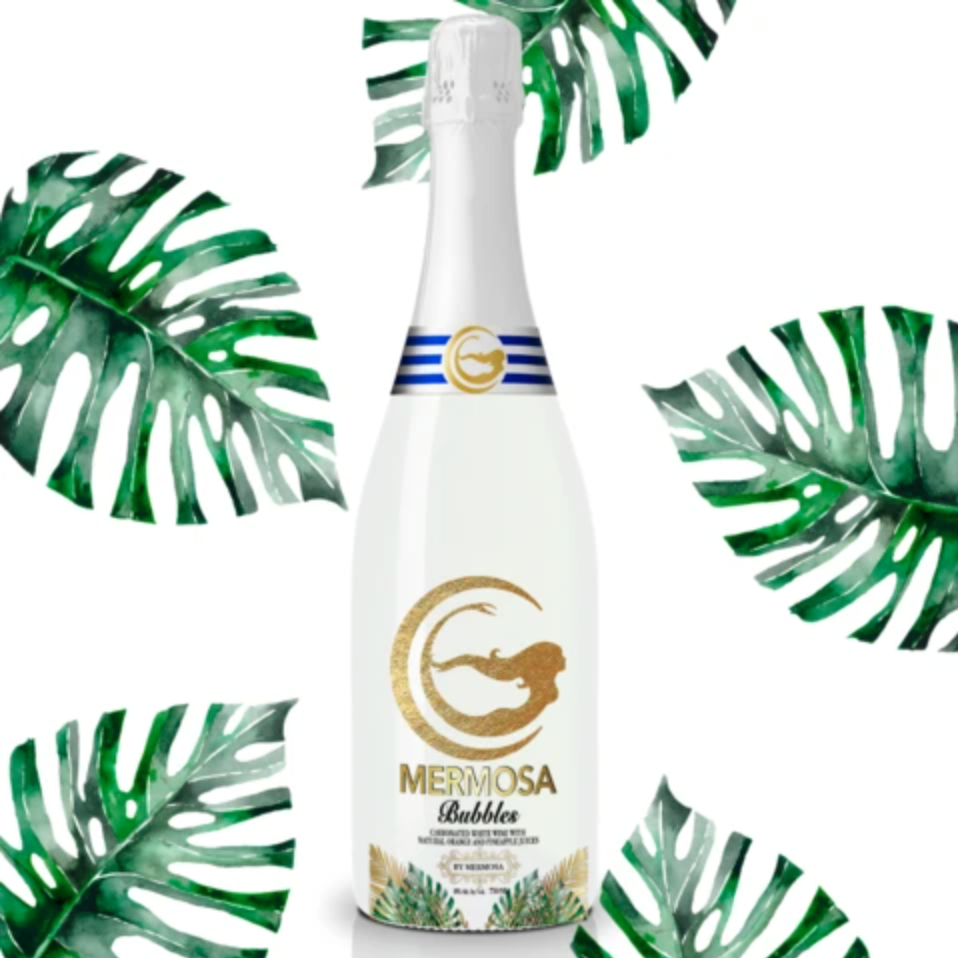
Mermosa is inspired by a love story so powerful that it broke the chains of slavery. It's an epic tale of the founder's ancestors, Celestine, a Black Haitian woman, and Philippe Noisette, a white French gardener. They married in the late 1700s and blazed a trail of love and devotion that included Philippe claiming ownership of his wife and children to keep them out of the slave trade in Antebellum South Carolina.
Philippe's great success as a gardener led him to introduce the Noisette Rose, a flower bold and enduring like his beautiful Celestine. Upon his death in 1835, Philippe made sure that all of his money went to Celestine and their children. It could have led them out of the South to freedom, but Celestine took matters into her own hands and negotiated freedom. Her audacious spirit and their eternal love is infused in every sip of Mermosa.
We’ve chosen the Mermosa Bubbles as the wine this month because it’s so honest in what it is. An unpretentious, fun wine, made with orange and pineapple juice, for a mimosa like springtime sipper with a nod to the tropics - Florida and Haiti. As the weather starts warming up here in St. Pete, this is the perfect brunch wine, or wine to take to the pool. We also like that it’s only 8% alcohol so it’s perfect for day drinking without ruining your weekend! It makes perfect sense to pair Mermosa with Libertie, and we hope you enjoy the heritage and storytelling of both of these amazing items!
Other recommended books + bottles:
The Bluest Eye by Toni Morrison - uses storytelling to discuss difficult social themes
Dr. Konstantin Frank Riesling Reserve - started by a doctor, made by a woman in New York State
Real People: September 2020 Book + Bottle Pairing
Fredrik Backman’s Anxious People + Tangent Sauvignon Blanc
This post is a bit delayed because I was saving it to correspond with the release of Fredrik Backman’s latest novel, Anxious People, which is being released today, Tuesday September 8th. I am such a huge fan of A Man Called Ove and Backman’s other character-driven novels, that I’ve been anxiously awaiting this one! I knew it had to be my September pairing, so thanks for your patience until we were allowed to release it. Fun tidbit: new books are always released on Tuesdays!
From the title of this month’s book, Anxious People, we can tell a bit about the premise of the story. I think in our particular uncertain times, we’re all feeling a bit anxious and can relate to this aspect of the characters in the book. However this book isn’t a downer piece about negative folks. It’s hilarious, it’s perceptive, it’s relatable, and it's deep. Backman’s writing takes the worst aspects of people and makes them comical. He balances his characters’ inner tragedies with heroic growth. He’s somehow able to make us laugh and cry simultaneously.
This book falls into several genres: it’s a whodunnit mystery, it’s a comic novel, and it’s a literary character drama. I love that it’s a work in translation (from Swedish by Neil Smith). It’s just what we need to keep the mood light while still reading quality literature.
THE BOOK

Fredrik Backman has become known for his dynamic character building. In A Man Called Ove, he took the grumpiest, saddest old man and somehow made him a lovable hero. His recurring character of Britt-Marie is the worst, until we come to know her and relate to her fears and anxieties and then we start to like her, too. Now, Backman has written a story about a whole crew of unlikeable people that are trapped in a room together - idiots he calls them. The premise is that during a busy open house, a failed bank robber enters the space taking all the prospective home buyers hostage in the small apartment. Stuck together on this tiny stage, we watch as the characters navigate their own anxieties and start to show their true colors - who they portray on the outside isn’t necessarily who they really are. There’s a twist around every corner that will keep you on your toes.
Backman’s real talent is being able to call the reader (and all of his characters) “idiots” while simultaneously redeeming humanity through their stories. This message is more important now than ever - we’re socially distanced and it seems like many of us are now afraid of people just for existing. We judge everyone all the time - the way they wear their mask, what they’re willing to do in public versus what they use as an excuse to stay home, how close they stand when they talk to us. Yet inside, we’re all struggling with the same anxieties, trying to live our lives to our best abilities, and really just make it through the day.
A few of Backman’s books tinker with the idea of suicide, and in this one too, there’s a peripheral scene where this sort of tragedy unfolds. I think it’s this sort of extreme tragedy that places the rest of the anxieties in the book in context. We never really know what someone else is going through. They too have fears, heartbreak, anxieties, and are just trying to get through another day.
In conclusion, we’re given a sense that while we’re all so different and complicated, we’re all really the same, we’re all on the same team, and we’re all idiots together. We make life better, together.
The truth? The truth about all this? The truth is that this was a story about many different things, but most of all about idiots. Because we’re doing the best we can, we really are. We’re trying to be grown-up and love each other and understand how the hell you’re supposed to insert USB leads. We’re looking for something to cling on to, something to fight for, something to look forward to. We’re all doing all we can to teach our children how to swim. We have all of this in common, yet most of us remain strangers, we never know what we do to each other, how your life is affected by mine…But when you get home this evening, when this day is over and the night takes us, allow yourself a deep breath. Because we made it through this day as well…There’ll be another one along tomorrow.
— Anxious People, Fredrik Backman
THE WINE
It’s California wine month, so I wanted to highlight a California wine with our September pairing. I wanted something a bit nervy to go with the anxious energy of the book, but something that also was not quite what it seemed on the outside. Nervy is a term sometimes used to describe wines that seem to not sit still on your palate, instead racing around with what feels like nervous energy. Wines that could be considered nervy include riesling and sauvignon blanc. I found this gorgeous bottle of Edna Valley Sauvignon Blanc and knew immediately it was the best pick.
Many California wines end up being aged in oak to give them that revered rich style that California has come to represent. In fact, the term Fumé Blanc was created in California to describe the then new Sauvignon Blancs aged in oak, made by Robert Mondavi in the late 1960s. These oaked whites gained popularity for a while because they symbolized a departure from the sweet white wine that had previously held favor. Now, as we’re back in a dry wine movement, and almost all quality white wines on the market are dry wines, this moniker is no longer needed, and neither is the oak. You can find dry, crisp white wines that don’t need sugar or oak to make them better. The Tangent Sauvignon Blanc in this month’s pairing is dry, unoaked, citrusy, and fresh tasting. It’s nervy!
Edna Valley in the Central Coast is California’s coolest wine growing area which makes it perfect for producing crisp, racy white wines. This one has notes of zesty citrus, passionfruit and guava backed by bright acidity and chalky minerality. It’s got the tropical fruit we love in a New Zealand Sauvignon Blanc and the refined elegance of a Sancerre (French Sauvignon Blanc).

The real reason this bottle is such a perfect fit is how closely the wine production mirrors the people in Backman’s novel. All the wine comes from the same vineyard, Paragon, but the grapes come from distinct blocks in the vineyard, are made into separate wines, and then are blended together. Look at the label - the gorgeous art represents a cohesive whole made up of distinctive components. These components are the blocks in the vineyard or the characters in the novel. When building a vineyard, the winegrowers find that particular areas have their own characteristics that create differences in the finished wines. Perhaps the aspect over here faces the sun a bit more so that batch of grapes will ripen more, or on the slope of that hill over there, the wind rushes through and makes the grape struggle a bit more. You could make a wine from the vineyard as a whole which would combine all these elements or you could pull grapes from just one of them which would give that wine that very distinctive character - more ripeness, perhaps, or more concentrated flavors from the struggling grapes. How Tangent is made is that they make individual wines from each little block in the vineyard. Then after experiencing the unique characteristics of each wine, they blend them together to get the best representation of the vineyard.
I loved how similar this felt to the characters in the book that all had such distinctive personalities and all brought their own type of anxiety to the situation, but at the end, all together, the characters have intertwined and affected each other to create such an amazing novel. Sometimes the the whole is greater than the sum of its parts.
Book Review: Bubble in the Sun, a community review by Patricia Mastry, March 2020
Bubble in the Sun, a review by Patricia Mastry, March 2020
I am thoroughly enjoying the book Bubble In the Sun by Christopher Knowlton. The book is the second I have purchased from my new favorite bookstore (Blue Zones Kitchen a cookbook by Dan Buettner was first). Knowlton’s book is a fascinating look back into the gilded years of Florida’s explosion into the playground for the rich and famous of the roaring twenties. The book carefully charts a course from swamps and dirt roads filled with alligators and mosquitoes straight to fabulous hotels and resorts around them that put Florida on the map. It also lays out the events, short-sided decisions and financial follies that helped push the country into the Great Depression. Minus a virus, the book brings all too clearly to sight how quickly the actions of a few imperil the lives of the many. Great read. Highly recommend!


Murder Down Under: May 2020 Book + Bottle Pairing
Chris Hammer’s Scrublands + Tyrrell’s Hunter Valley Semillon
I was joking with a friend the other day about how I really should diversify my reading and finally pick up a book by white male. Maybe it was because I am a woman myself, or maybe because society has been placing extra attention on reading more diversely, but I had been reading primarily women and women of color over the past year and had unintentionally biased myself in an opposite direction. I am deliberate in my attempt to make my pairings diverse in both author and genre, and we did choose Steinbeck’s East of Eden as a pairing last year, but that’s a classic, not a contemporary male author. I wanted something more overtly masculine, if that’s an appropriate descriptor. In flipping through some of the interesting books that have passed through the shelves recently, one in particular stuck out to me, and when I poked through it I knew I had my answer.
The book Scrublands stuck out to me immediately because it takes place in Australia. I adore Australia and all things Aussie, and this book seemed authentic - it takes place mid-drought in a rural Australian town and the author is from Canberra. The added bonus is that it’s a mystery/thriller, a genre I rarely indulge in. From the back cover description alone, the book draws you in.
In Riversend, an isolated Australian community afflicted by an endless drought, a young priest does the unthinkable: he kills five parishioners before being taken down himself.
The book in fact is not just about this one murder, but instead weaves multiple layers of stories together as the mystery becomes increasingly complex. The main character, Martin, is a journalist who moderately begrudgingly takes the assignment to report on the church murder a year after the horrific event. Somehow, he becomes much more involved than he anticipated as another round of mysterious deaths open up more questions than Martin can answer. I won’t say too much more about the mysteries because the fun in reading them is navigating the author's sleight of hand and the feeling of suspense as you try to solve the puzzle.

From page one, author Chris Hammer’s descriptive language sets a scene so desolate your own mouth gets parched. It feels like an old Western but the story is contemporary. You can see the red dust, the outdated wooden siding, and the sun-wrinkled skin of the characters. The book takes place in the fictional towns of Riversend and Bellington, but the inspiration for the backdrop is very real - an expansive place called Riverina in New South Wales, Australia. It’s literally the scrublands - dry and dusty and hot with some scrub brush for vegetation that the kangaroos can munch on.
(Check out this interview with the author that includes some photos of the desolate landscape that inspired the book.)
Communities like this are dependent on the rivers that run through the region for irrigation for their crops, including wine grapes. Without this water, towns literally cannot survive, and it is this barren backdrop that Hammer thought to set his mystery novel. The local river has run dry and the town is mid-way through a historic drought. It presents like hell, itself, a perfect setting for a mystery about a murderous priest.
To help you combat all this dust and this heat, we’re pairing this month’s book with a Hunter Valley Semillon. Hunter Valley is a smaller, well-regarded wine region within the larger and less prestigious Riverina region in New South Wales Australia with a cooler, damper condition than the surrounding heat of Riverina in which this story takes place. The wine too, is refreshing, and thirst-quenching, and provides a respite amongst the death, suspense, and insipid heat of the novel.
Semillon is a classic grape variety that originated in Bordeaux, France, where it is often blended with sauvignon blanc to make dry, white Bordeaux Blanc, and it also has the ability to become the indulgent, rich dessert wine Sauternes. In France, the semillon serves the purpose of rounding out the sauvignon blanc - it makes the resulting blend more mouth filling, round, and rich. In France it’s pronounced sem-ee-yawn but in Australia where semillon wines are nothing short of national treasures (Karen MacNeil, The Wine Bible Second Edition, pg. 70), the Aussies pronounce it sem-il-lawn. The style of the wine changes a bit too, down under. While they can make rich, thick, and sweet botrytized wine, the predominant style is one that is lean, tart, and racy.
Because of the cooler, cloudier, damper climate found in Hunter Valley, wine grapes could be exposed to a fungus called botrytis, or noble rot. Contrary to how it sounds, this is often a desirable condition. The fungus attaches to the grape and sucks out the water inside, leaving a much more concentrated and richly flavored juice. It can also add compelling exotic flavors like ginger, chamomile, honey, and wax to the wine. This is what happens in Bordeaux to make Sauternes, but in Hunter Valley, the Aussies tried to prevent this by picking earlier in the season when the grapes were a little less ripe before the rot had time to take hold. What resulted was an incredibly fresh, lively, refreshing wine that has become extremely well- regarded itself.
Tyrrell’s is one of the original wine producers in the region and they make the most awarded Hunter Valley semillon, called Vat 1. That one would run you about $90 a bottle, so I’ve picked their basic Hunter Valley semillon that is much more approachable in price and still provides that tingling springboard of energy that these wines are known for. This semillon is a super aromatic wine with an indulgent nose. You’ll pick up on the honey, flowers, and light stone fruit. Its aromas excite because you can feel the tension building as the wine seems bursting with kinetic energy. Smelling it, it seems to move around alive on your nostrils. A sip of the wine is thirst quenching and refreshing but reflects that tightness that was apparent on the nose. The fruit is tart, not ripe and very dry - a reflection of the earlier harvest that preserves the driving acidity in the wine. There’s some tart tangerine, and under ripe white peach with a hint of pleasant grapefruit bitterness on the finish.
What’s cool about this wine is how much it can change over time. That acidity that is so linear and driven when young allows the wine to develop in the bottle over time. That Vat 1 semillon could/should age in bottle for ten years or more. As semillon ages, the character expands - becoming rich and almost lanolin or oily-like in texture and developing a nuttiness that aligns extremely well with the crystalline ginger honey notes that were mere wisps in the young wine. If you enjoy this wine, maybe it’s worth stashing one away to try again in a few years to see how the wine changes.
This particular wine is meant to be drunk relatively young because it is so absolutely fresh and that is one of the reasons that we paired it with Scrublands. Its freshness is a respite from the dry and scorching backdrop of the novel, but the acidity of the wine is on par with the tension in the story’s plot.
You can purchase this Book + Bottle pairing from our online store.
March 1861: March 2020 Book + Bottle Pairing
THE BOOK
On account of the fact that I wished to remain in the world of Louisa Alcott’s Little Women for as long as possible, it was with great pleasure that I accepted the recommendation of a good friend who had just finished reading March, by Geraldine Brooks. I eagerly picked up the book and was immediately rewarded with a jovial young Mr. March and several allusions to his little women that had enticed me to read. Yet, only a couple chapters in I began to feel a sense of loss of innocence and a vague disappointment as I came to know the once revered father figure. For what had once been an idolization of his morality and judgement became an understanding of his insecurity, righteousness, and sensitivity that I had a hard time reconciling. Over the course of the book, however, Brooks examines March’s every thought and indulges his every whim to lay bare the honest character that is much more real: one of conflicted ideals and personal struggles. Like all people, he should be neither idolized nor detested, but understood as simply a man.
The story begins with teenaged March who was a sales peddler that traveled to the south in search of fortune. As a northerner, he is inclined to despise slavery, but during his stay as a guest at a wealthy plantation, he unwittingly becomes accustomed to the glamour and ease that lifestyle provides him until the realities of the horror of the institution force themselves on him. He tries to redeem himself by breaking the rules of the white master and educating a promising young enslaved girl with the help of the black house slave, Grace, whom he develops feelings for. When his actions are discovered, it is Grace, not he, who receives the punishment of an extreme lashing. This seems to be the moment at which March begins his abolitionist mission in earnest, and his affection for Grace grows to absorb all the righteousness of his intentions. However, just as I idolized the character of Mr. March from a lack of truly knowing him, so too does Mr. March hold Grace on a pedestal. March seems to spend the rest of his life punishing himself for the injustice he witnessed and trying to make amends for the pain he inadvertently caused to Grace. He comes to idolize Grace as a beacon of his mission, but idolization is dangerous and futile as it serves to disregard the simple fact that no mortal is perfect, as March finally learns of Grace at the end of the story, finally freeing him from his self-inflicted prison.
“Are there any two words in all of the English language more closely twinned than courage and cowardice? I do not think there is a man alive who will not yearn to possess the former and dread to be accused of the latter. One is held to be the apogee of man’s character, the other its nadir. And yet, to me the two sit side by side on the circle of life, removed from each other by the merest degree of arc.”
Throughout the course of the book, Mr. March fights an internal battle between courage and cowardice as he struggles to implement his strong convictions, and in the course of it, he begins to mature from the zealous, idealistic young man he is at the beginning into a more wise and sophisticated man.
The book reads almost as a coming-of-age story rather than a biography of a grown man. So clearly can we see March’s mind awoken to the realities of the world. March seems so naïve - he resists many times the reality that his “helping” the black characters often puts them in a danger that he himself would never face. He finally acknowledges this fact at the very end of the story when he laments to Grace, “There was a man, Jesse, he handed me a gun, and I handed it back to him. I valued my principles more than I valued their lives. And the outcome is, they are slaves again, or dead.” He naïvely miscommunicates with his wife, too. In one particular scene, both Mr. and Mrs. March can sense that Mr. March is about to commit publicly to join the union cause at war. Mr. March interprets his wife’s gesture in the audience as pride and encouragement in his decision, whereas in part two of the book we hear from Mrs. March herself that this gesture was a pleading for him not to go. While he feels vindicated by his wife, she feels betrayed and ignored. As a chaplain, his job is to comfort men and boys at war, but he so often prioritizes his naïve moralities that he leaves the men he’s supposed to be serving in a state of anxiety and and unsettledness. March wants to help the cause, the war effort, the mistreated blacks, the animals, etc. and has the courage to sacrifice much toward these goals but is also often so paralyzed with righteousness and cowardice that his efforts are unsuccessful. At times I imagined almost an Amelia Bedilia-type character from another age, where the good-hearted intentions belie darkly comic disasters.
“One day I hope to go back. To my wife, to my girls, but also to the man of moral certainty that I was . . . that innocent man, who knew with such clear confidence exactly what it was that he was meant to do.”
As I mentioned, I struggled with Mr. March’s character at times, finding him almost simple minded, albeit principled and kind. Yet while I found the character of Mr. March to be distasteful at times, I found the book to be engrossing and the interpersonal relationships in the book to be especially complex and an unexpected delight. The author’s incredible research, eloquent style, and ability to imagine the lives of characters so different from herself serve to prove her honor of having earned the Pulitzer Prize for its writing. I loved to see Mr. March interact with the “contraband” - his best character definitely surfaced while he taught. I loved the complex way the author presented the character of Master Clement - at first we like him - with his fondness for books and his seeming small kindnesses to his slaves - but then, through the character of Mr. March, we begin to see his true character as they discuss the justifications of slavery, when Mr. Clements prohibits the education of one of his slaves, and when he enacts a horrible punishment on Grace, a character we thought he was protecting. I especially loved the character of Mrs. March - she’s rebellious, outspoken, principled, yet is able to enact her values in her daily life. She’s much more of a realist - a perfect example of this is when Mr. March starts donating to John Brown’s cause in order to make Mrs. March happy. She’s pleased at first, but ultimately Mr. March is an all or nothing kind of guy and ends up giving their entire fortune to the cause, whereas Mrs. March more would have preferred a more moderate, reasonable contribution. I loved to see the different interpretations understood by Mr. and Mrs. March and found it interesting to learn about their relationship and marriage from each character separately.
“I am not alone in this. I only let him do to me what men have ever done to women: march off to empty glory and hollow acclaim and leave us behind to pick up the pieces. The broken cities, the burned barns, the innocent injured beasts, the ruined bodies of the boys we bore and the men we lay with.
The waste of it. I sit here, and I look at him, and it is as if a hundred women sit beside me: the revolutionary farm wife, the English peasant woman, the Spartan mother-‘Come back with your shield or on it,’ she cried, because that was what she was expected to cry. And then she leaned across the broken body of her son and the words turned to dust in her throat.”
On one hand a character study of the absent but beloved father from Little Women, and on the other other hand a books about the moral complexities of the Civil War, March is an excellent read for many types of readers. There is love story, history, and war narrative. We hear from both Mr. and Mrs. March in their turns. In short - the story is complex, and even trying to write this review has me confounded - Do I like Mr. March at the end of the story? Between which characters is the love story meant to be? Is morality a gradient or are there universal truths of right and wrong? How can Mr. March be so righteous in his abolitionist values and be so oblivious to the status of women? Isn’t Mrs. March the true hero of the story or is she impossibly flawed too? All I can do is recommend highly that you read March, perhaps over an equally complex bottle of wine - a claret…
THE WINE
I recall from Little Women the strict prohibitionist nature of the March family, or at least that’s the message given to the young girls. Many abolitionists and advocates of women's rights were also prohibitionists as many identified alcohol as a fuel for the rage and violence men would inflict upon women. Yet, in March it is clear that alcohol, while scarce during wartime, was still honored as both a medicine and a respite from the dark times. While perhaps a more natural pairing with this book might be one of the new alcohol-free tonics that are becoming more popular, I for one can find a wine pairing in even the most sparse of circumstances!
Mrs. March brings her ailing husband some “fine wine” to help him recover from his fevers, and Mr. March takes brandy with his host at the plantation he stays at as a youth. Yet it’s a night of indulging in Claret with the master that sparks March’s courage to kiss Grace for the first time. Since Grace’s relationship with Mr. March was such a foundational theme of the book, I think it only right to do it justice as a pairing for this novel.
What is claret? Pronounced clair - ette, at a most basic level it means a red Bordeaux wine. Due to Bordeaux’s location on the mouth of a river on the Atlantic side of France’s coastline, wines from there were easily exported, especially to Great Britain. Back in the 12th Century when this oenological relationship began, the claret wines were thin and light colored - probably more like rosé. The word itself indicates something clear or light colored, a vastly different impression from the Bordeaux wines of today which are dark and full-bodied and rich. So, the Brits called this wine claret and have had a love affair with it ever since. Due to the close relationship between Britain and the United States, it’s natural that these wines ended up making their way to the new country, as well.
The Gironde, Dordogne, and Garonne rivers that run through Bordeaux have created pockets of land with differing soil types. On the left bank, near the Médoc, the soils are primarily well drained gravels and stones. This is where they grow primarily cabernet sauvignon - the rocks hold heat and reflect it back onto the grapes, allowing them to ripen in a region that is on the same parallel (the 45th) as the Willamette Valley in Oregon, Maine, and South Dakota. On the right bank, the soil has more clay, which doesn’t drain as well (it holds water), so it’s less suited to cabernet sauvignon, but excellently suited to merlot which can ripen without the extra warmth. This is home to the famed regions of St. Émilion and Pomerol. Depending on the particular place you get your wine, generally speaking they’ll lean a little more toward cab or a little more to merlot. The funny thing about this expensive, iconic wine is that at heart, they’re just red blends! Most Bordeaux wines are blends of primarily merlot and cabernet sauvignon, but may also include cabernet franc, petit verdot, carmenère, and malbec.
Historically, there were wineries, called Chateaux, that produced varying levels of quality wines, and in 1855, the best of these were written down as the top growths - you may have heard of “First Growth Bordeaux” like Chateau Margaux or Chateau Latour. Since then, additional classifications have been added (originally, they only ranked Left Bank wines), and volumes of books have been written on the topic of understanding the validity (or not) of these classifications. The history and context of Bordeaux wines is as complex as the story in March - what is it supposed to be, how does money and capitalism impact the status of the wines in this region, how do the grapes interact with one another to create the nuances in the wines, what impact does where the grape is from have on the final wine, and so much more?
Another fun thing to think about while drinking Bordeaux is the interplay between masculine and feminine in the wine. What words do you use to describe the wine you’re drinking, and do they have a gendered connotation? I love reading Karen MacNeils’ writing on wine, and she often uses these sorts of descriptions. This is ALL stereotype, so bear with me: Bordeaux wines are often considered more masculine wines (rugged, tannic, big bodied, grippy, etc.) when compared to the other French icon of red Burgundy (Pinot Noir) (elegant, ethereal, light, etc.). Then, when you get down to just Bordeaux, it’s the cabernet that takes the more masculine descriptors and merlot that seems more feminine. As a pairing for March, where we hear from both Mr. March and Mrs. March, I think the complex interplay between masculine and feminine forces plays out very nicely in both the book and the wine.

For this pairing, any good Bordeaux will do, but let me tell you a little about the specific one I picked. As you know, the physical shop is about to open, so soon I’ll have real wine inventory to go along with these pairings. Book + Bottle is an approachable wine bar - you won’t find thousand dollar bottles here. We want you to be able to try wine that is good, that you can have with dinner or share with friends. We want you to be able to explore what the wine world has to offer you, and so we pick bottles that will take you on this adventure without breaking the bank. This bottle we chose is what some call a Baby Bordeaux because it’s not a particular “growth” or classified wine. It’s made to drink now rather than needing to cellar it for decades before it reaches its peak. It’s made with the same quality and grapes as a top Bordeaux but in a more approachable style.
We chose a 2017 Bordeaux Rouge (meaning a red wine from the Bordeaux region made of grapes that were harvested in 2017) from Château de Fontenille. The 2017 vintage was made of 80% merlot and 20% cabernet sauvignon. Personally, I lean towards the merlot-heavy blends because I think they offer a velvety, smooth mouthfeel that I love without the sometimes harsher tannin and green-ness of a young cabernet. What’s extra cool about this little wine is that the grapes were grown, the wine was produced, and it was bottled on the chateau’s property - that’s what mis en bouteille au chateau means on the front label. This chateau is located not on the Left Bank or the Right Bank of Bordeaux, but in the Entre Deux Mers region - in between the two - meaning that it’s got some gravel and some clay. This wine has a full body, a rich red color, and tastes of black fruit, earth, and light oak.
We definitely recommend pairing this wine with a meal - meat is a classic choice to pair with Bordeaux, but since our character of the day, Mr. March, was an ardent vegetarian, we’ll recommend a hearty mushroom and white bean cassoulet. The mushrooms complement the earth notes of the wine and add a meaty texture, along with the beans, that can stand up to the body and tannin of our wine. This little bottle of wine is modest but delicious and will cost you only about $20 retail when we open later this month.
Cassoulet takes a while to prep, so crack your bottle, get your beans stewing, and start reading March while you wait. Enjoy!
The Roaring Twenties: February 2020 Book + Bottle Pairing

Fun Fact: In the 1920s champagne was served in champagne coupes like these! The fluted champagne glass didn’t become popular until the 1970s. Now, the trend is to use regular white wine glasses for sparkling wine to allow for greater appreciation of the wine’s aromas.
Most of us have read The Great Gatsby - maybe in high school or perhaps more recently. We’ve dreamed of the fancy dresses, dapper outfits, late night parties, and the nonchalant luxury of the the roaring twenties. Well, baby, it’s the roaring twenties again. So, to celebrate the twenties, we thought we’d pick some F. Scott Fitzgerald and transport ourselves back to the last century when everything glittered! I knew I wanted to branch out from the classic Gatsby and try something new, and as I was browsing the titles one in particular just spoke to me: This Side of Paradise.
As you know, Book + Bottle has been a long time coming. For many months now, I’ve felt that the next thing (the lease, the building permits, breaking ground, opening day) is imminent, right around the corner. We’ve made huge progress but it still feels like a slow slog. The progress on the store feels like a coming of age story: I’m the young (well, young enough!) protagonist bringing my dream into maturity, fighting trials and tribulations along the way. The German word for this type of coming of age novel is Bildungsroman, which literally means “formation novel.” Now if that isn’t the perfect metaphor…
I know, because I’m behind the scenes, that Book + Bottle is going to be paradise for all you book and wine lovers. And right now, we’re just right on the other side of it, looking in.
THE BOOK
Turns out, This Side of Paradise is also a Bildungsroman. In it, handsome Amory Blaine grows up amongst wealth and privilege, attending prep school at St. Regis and college at Princeton. He wants for nothing except for approval and distinction in the world. The first few chapters read almost like Gossip Girl with children play acting as adults. What’s so particularly recognizable in Amory’s character is his millennial expectation of greatness but insecurity in how to achieve it. He works toward self-improvement throughout the novel - taking up football for sport and reading literature to expand his mind. After he enlists in the army at the outbreak of the first World War, his beloved mother passes away and the family loses its fortune, leaving Amory to build his character and pocketbook in a new way. In this stage of his young life, he faces actual tribulations of failed romances, the loss of loved ones, a struggling career, and a general cynicism about the world around him. Amory navigates this period with self-destruction and small graces, eventually emerging a bit more hopeful and much more of an adult. He is “formed” you could say.
The name This Side of Paradise comes from a poem by another writer known for his good looks, Rupert Brooke, entitled “Tiare Tahiti,” (see below) with the line “Well this side of Paradise!… There's little comfort in the wise” which forms one of two epithets in the book. This sums up the theme of the novel: on the path to the perfection of heaven, the slog of life on earth can be very hard. This disillusionment is not unique to the 1920s. How curious that one hundred years later, we see youth struggling with the same idealism and disappointment of an age gone by. It’s almost a character study of the “entitled millennial”: Amory Blaine is unlikable at the beginning of the story - spoiled, entitled, and lazy. Yet, throughout the course of the novel, we begin to grow more fond of Amory and identify with his aspirations and efforts to be worthy. Fitzgerald narrates the book in an almost a self-absorbed sort of way where we get to participate in Amory’s development into a more complex, interesting, and redeemable character. There couldn’t be a more relevant time to read this book.
I love it, too, because of the focus on literature - Amory reads many of the greats of the time, and the name dropping almost serves as an education of sorts of the liberal arts of that time. Fortunately, someone has compiled a bibliography of the books referenced in This Side of Paradise if you want to read what Amory read on his path toward greatness.
What’s endearing about the history of this novel is why Fitzgerald wrote it: Fitzgerald had fallen in love with a beautiful, wealthy woman by the name of Zelda. After a brief affair, she broke off their relationship, and Fitzgerald thought getting published was the only thing that would bring her back. That set a fire under his toes and This Side of Paradise was published in 1920. It worked - the book wooed Zelda - and they married that same year. To honor this underlying purpose of the novel, we’ve chosen Iron Horse’s Wedding Cuvée to pair with the book.
“Too much of anything is bad, but too much Champagne is just right.”
THE WINE
It may be cliché to do bubbles with Fitzgerald, but there are too many reasons that the Iron Horse Wedding Cuvée is the perfect pairing to ignore it. Like the Fitzgeralds’ marriage, prohibition also started in 1920, and that decade produced some of the classic “prohibition era” cocktails that remain classics today, like the Old Fashioned or Gin Fizz. And, if people weren’t drinking cocktails, then they were drinking champagne, as it was the drink of the rich and famous. Real champagne was hard to come by, so it really represented the affluence one had to possess to have access to the drink. Bubbles are celebratory and great for parties, and if you lived in New York City during the Jazz Age, as Amory does for a spell, you were sure to be sipping bubbles. Champagne fueled the late night, indulgent parties that Amory attended in both Princeton and New York. This era was all about luxury, indulgence, and ease, and bubbles fit the bill perfectly. Yet, Fitzgerald is American through and through, so we’ve picked an American bottle of bubbles to showcase the uniqueness of the States in the 20s.
However, you can’t party forever, and eventually prohibition and austerity seeped into American Culture. It wasn’t until 1933 that Prohibition ended in the US, and it took over 30 years to really get the American wine industry going again. But once it did, it quickly began to make its mark.

A view from the top of the hill at Iron Horse Winery in Sebastopol, California.
Iron Horse Winery is located in Sebastopol, California near Sonoma, at the top of a brilliant little hill overlooking the rolling vineyards. Founded in 1976, the winery has become renowned for making high quality American sparkling wine. It was served at the historic Reagan-Gorbachev Summit Meetings that helped to end the Cold War, and has been served through six consecutive White House Administrations since. This marked a turning point in American wine history, when our government recognized that American wine could be excellent and it made a statement to serve American wine at these international political meetings. Iron Horse is a family-owned winery, and when the founders’ daughter Joy Sterling was married, they made a wine they called the Wedding Cuvée in honor of the event. It was so delicious and so popular that they release it almost every spring, and this is the one we’re enjoying today alongside This Side of Paradise. Joy Sterling is now the CEO of the winery and author of several indulgent books about living on a winery.
“Here’s to alcohol, the rose colored glasses of life.”
In addition to being bubbles and being American, the Iron Horse Wedding Cuvée is also pink! F. Scott Fitzgerald famously said that alcohol was the rose colored glasses of life and this rose colored wine certainly makes life even better. With a beautiful rosy peach color, this wine exudes the sophistication and elegance that Amory aspired to and at some points achieved. A little exotic, even, with notes of mandarin orange peel and nutmeg, the wine is smooth and tingly on the palate and balanced in its approach. It’s romantic and sensual, but also fitting for a celebration.
Now here’s the cherry on the top of this perfect pairing: the winery’s own tasting notes for this release of the Wedding Cuvée describe a hint of “Tahitian lime,” which ties in beautifully to the poem below, “Tiare Tahiti”, which was Fitzgerald’s inspiration for This Side of Paradise. Cheers!
Tiare Tahiti
Mamua, when our laughter ends,
And hearts and bodies, brown as white,
Are dust about the doors of friends,
Or scent ablowing down the night,
Then, oh! then, the wise agree,
Comes our immortality.
Mamua, there waits a land
Hard for us to understand.
Out of time, beyond the sun,
All are one in Paradise,
You and Pupure are one,
And Taü, and the ungainly wise.
There the Eternals are, and there
The Good, the Lovely, and the True,
And Types, whose earthly copies were
The foolish broken things we knew;
There is the Face, whose ghosts we are;
The real, the never-setting Star;
And the Flower, of which we love
Faint and fading shadows here;
Never a tear, but only Grief;
Dance, but not the limbs that move;
Songs in Song shall disappear;
Instead of lovers, Love shall be;
For hearts, Immutability;
And there, on the Ideal Reef,
Thunders the Everlasting Sea!
And my laughter, and my pain,
Shall home to the Eternal Brain.
And all lovely things, they say,
Meet in Loveliness again;
Miri’s laugh, Teïpo’s feet,
And the hands of Matua,
Stars and sunlight there shall meet
Coral’s hues and rainbows there,
And Teüra’s braided hair;
And with the starred tiare’s white,
And white birds in the dark ravine,
And flamboyants ablaze at night,
And jewels, and evening’s after-green,
And dawns of pearl and gold and red,
Mamua, your lovelier head!
And there’ll no more be one who dreams
Under the ferns, of crumbling stuff,
Eyes of illusion, mouth that seems,
All time-entangled human love.
And you’ll no longer swing and sway
Divinely down the scented shade,
Where feet to Ambulation fade,
And moons are lost in endless Day.
How shall we wind these wreaths of ours,
Where there are neither heads nor flowers?
Oh, Heaven’s Heaven!—but we’ll be missing
The palms, and sunlight, and the south;
And there’s an end, I think, of kissing,
When our mouths are one with Mouth....
Taü here, Mamua,
Crown the hair, and come away!
Hear the calling of the moon,
And the whispering scents that stray
About the idle warm lagoon.
Hasten, hand in human hand,
Down the dark, the flowered way,
Along the whiteness of the sand,
And in the water’s soft caress,
Wash the mind of foolishness,
Mamua, until the day.
Spend the glittering moonlight there
Pursuing down the soundless deep
Limbs that gleam and shadowy hair,
Or floating lazy, half-asleep.
Dive and double and follow after,
Snare in flowers, and kiss, and call,
With lips that fade, and human laughter
And faces individual,
Well this side of Paradise! ....
There’s little comfort in the wise.
And the Oscar Goes to...
Here are the nominees for Books that Inspired Movies That Are or Should be Nominated for a 2020 Oscar Award:

THE IRISHMAN
This book was so intriguing, it changed the entire course of the movie Scorsese and Di Niro were planning. With this as its inspiration, “The Irishman” is cleaning up more than paint.

JoJo Rabbit
A dark novel that inspired a comedic “anti-hate satire.” This story remains surprisingly relevant today.

Little Women
A classic now. A classic forever. And the newest movie adaptation that may be the best one yet.

Just Mercy
This one didn’t get nominated but probably should have. Read it and see the movie anyway and make your own decision!
A Wine a Day: January 2020 Book + Bottle Pairing
Ah, the holidays. They tempt us with sweets and treats and alcohol and parties and by the end of December, half the population is scanning the internet for the latest and greatest diet to make October’s pants fit again. Some are practically begging for a cleanse or a booze-free January so they start to feel like themselves again. I could have a bookstore the size of the New York City Public Library and fill it with with nothing but healthy cookbooks, diet books, journals for aspirations of weight loss and so on, and people would line up on New Year’s Day to find a guidebook for their best year yet.

Oh yes, Happy New Year to you! Did you have a happy holiday and ring in the new year with a bang? Did you make any resolutions for 2020? It’s a week in now…how are those commitments holding up? Are you wavering yet? I read a USA Today article that says most people have quit their new year’s resolutions by January 17th! Ha! Research shows that unless we make a habit of something, it’s way harder to stick with it. A diet? Hard. A lifestyle? Do-able. But who on earth wants to make a lifestyle of steamed veggies, grilled chicken, cottage cheese, and water (instead of wine) for the rest of their life? Not me, that’s for sure.

What if I told you your lifestyle could be full of delicious food, parties with friends, and even wine, and that you would live to be a hundred? (Wow, that sounded a little too much like a home shopping sales pitch…but wait, there’s more!) There are a few places in the world where people do just that and have a higher proportion of their population live healthily past 100 than most other places in the world. These magic fountain-of-youth places are called Blue Zones and they are: Sardinia, in Italy; Okinawa, Japan; Loma Linda, California; the Nicoya Peninsula in Costa Rica; and Ikaria, an island in Greece.
As these regions were studied, it was determined that they all shared certain common characteristics - diet, lifestyle, movement, connection, etc. Now, thanks to this research, anyone can implement the lifestyle that keeps people in the Blue Zones so healthy.
There’s an entire community now dedicated to the Blue Zones, replete with newsletters, meal planners, travel opportunities, and more, so I’m not going to try to repeat it all here. But, there are a few pieces of the puzzle that I think are especially important: eating well, spending time with friends, and drinking wine.
THE BOOK
Let’s start with eating well. We all know that diet matters. What we all seem to disagree about is what the ideal diet should consist of. Personally, I love to eat. I love the flavors and the textures and the thrill of a perfectly cooked meal. Traveling is one of my favorite hobbies because it allows me to try new and exotic foods! Needless to say I’ve never been a fan of anything that restricts my desire to eat. Enter the Blue Zone style of eating (notice I didn’t say “diet”). From umami rich noodles to heaps of fresh bread and olive oil to waffles, soup, ceviche, and more, there are endless possibilities of life-extending foods to eat. The founder of the Blue Zones community has now collected his top one hundred recipes that will help you live to be one hundred years old. It’s called The Blue Zones Kitchen and it’s the foundation of our Book + Bottle pairing this month.
Just published in December, the book sold out almost immediately, requiring another print run. Our copies are currently on backorder but should be arriving shortly in our online store. I guess everyone wants to eat like the healthiest people on earth. With almost more stories than recipes, what you get is a full experience of the five Blue Zones around the world: gorgeous photographs from National Geographic photographer David McLain, stories of the lifestyles of the folks who seem healthier and happier than everyone else, nutritional tips like how to serve olive oil to get the most health benefits, and, of course, the recipes.

One favorite is the spaghetti with walnut pesto from Sardinia which takes an overused weeknight staple and turns it into a rich, decadent meal. A personal tip here - you can add an anchovy or two to the food processor to add even more umami flavor and healthful oils to enrich the recipe without any fishy taste. Or, make the sweet and spicy carrot salad from Okinawa and see how just a few ingredients can take boring carrots to complex heights! There’s something for everyone, and you might knock out another new year’s resolution — saving money — by cooking these recipes: beans, grains, and veggies are pretty inexpensive.
This will be a cookbook that you sit down and read, an inspiration and a starting place rather than an every night go-to for specific recipes. So pour yourself a glass of wine, sit down at the kitchen table, and start reading your way to old age :)
THE WINE

Speaking of pouring yourself a glass of wine, did you hear me say earlier that drinking wine is one of the keys for a long, healthy life? Well, that’s great news for us here at the wine bar! The trick to drinking the Blue Zone way is to do it in moderation, with food, and with friends. The food and friends part shouldn’t be difficult — you’re invited into Book + Bottle to share a glass and a snack with your closest friends any time (well, once we open!)! But moderation? That means only one to two glasses a day. The silver lining: you can drink wine every day!
Red wine is especially beneficial. Red wines, unlike most white ones, are made by fermenting the grape skins in addition to just the juice. The skins contain compounds called Resveratrols that protect the body against cancers, heart disease, and dementia. These antioxidants, in addition to a healthy diet and exercise, help to keep us young and thriving and drinking with friends into old age.

And, did you know that some red wines are even healthier than others? The wine we selected for this month’s pairing is called Cannonau. It’s a red wine from Sardinia that’s actually the same grape as Grenache or Garnatxa. And it’s delicious. I tried it for the first time months ago because a friend told me it was considered the healthiest wine in the world and I was shocked at how good it was. That was a bottle that, shared with friends, went down awfully easily. Anything in the name of health! When I saw the excitement around The Blue Zones Kitchen mounting, I knew that it would make a great pairing with the healthiest wine in the world. Turns out, Cannonau has a section written about it IN The Blue Zones Kitchen so it really is the perfect match.
Cannonau is like fresh berries bursting on your tongue while the bright sun filters through a pergola on a crisp day while the breeze blows an herbaceous scent across a glistening swimming pool. Very Mediterranean. No joke — that’s what it tastes like. I picked this one up at Bern’s Fine Wine in Tampa for about $20 and suggest that you do, too.
If you want to live forever, this is honestly the best place to start. So grab your cookbook, your best friends, and a bottle of wine, and get to living!
If you want to order the Blue Zones Kitchen, visit our online store.
Other Blue Zone books to read:
The Blue Zones: 9 Lessons for Living Longer, by Dan Buettner
Thrive: Finding Happiness the Blue Zone Way, by Dan Buettner
The Blue Zones Solution: Eating and Living Like the World’s Healthiest People, by Dan Buettner
The Blue Zones of Happiness: A Blueprint for a Better Life, by Dan Buettner
Fun things to do with your friends:
Take a walk together
Share a bottle of wine
Share a meal
Read together. Silently, together, you know what I mean.
Play a game
Share stories on a porch
Hit up your local bookstore | wine bar to check out the new books and have a glass of wine!
Read it First: Top Picks for TV and Movie Tie Ins (December 2019 Edition)
You may have seen the ad on Netflix or HBO, but did you know these are all books, first and foremost? Most of the time, the book is better than the movie, but these productions are all giving their books a run for their money. Our local expert on all things pop culture, John-Erik Johansson selected these top picks!


